Diamond vs. Moissanite: A Complete Side-by-Side Comparison
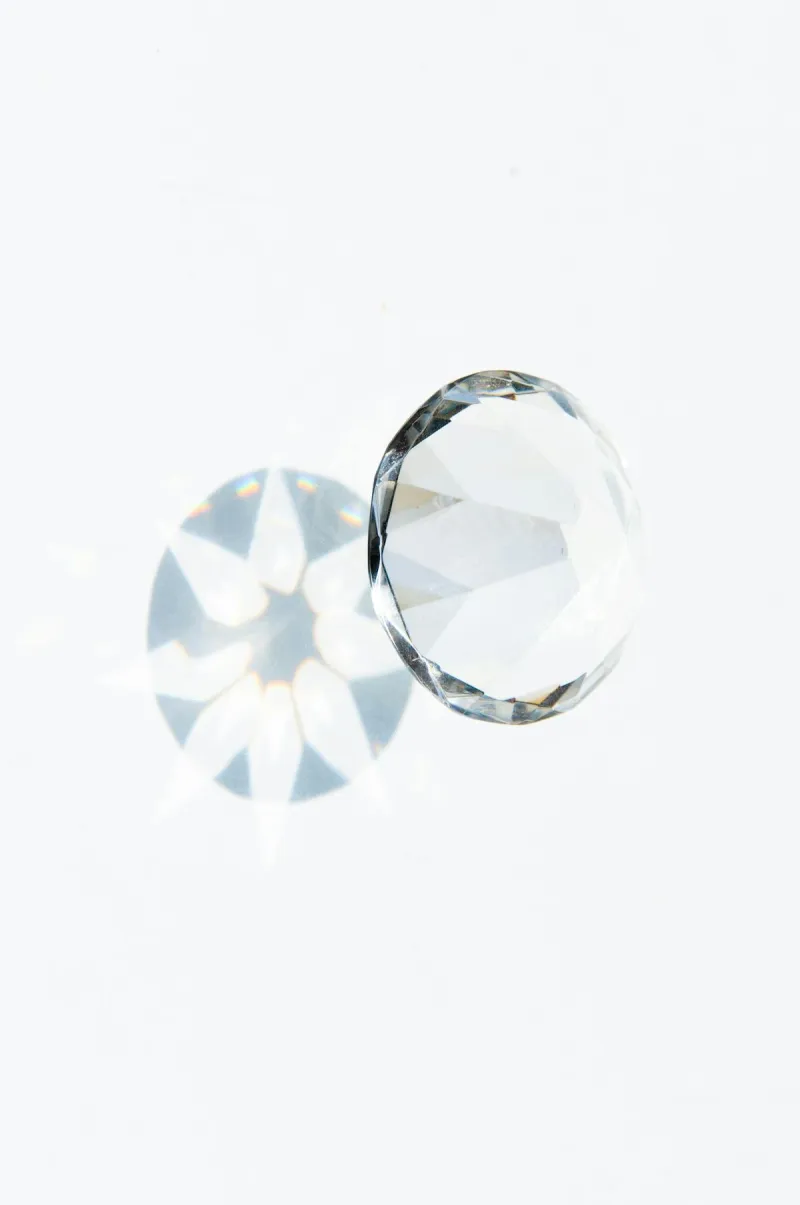
Moissanite has become one of the most popular diamond alternatives, offering impressive sparkle and durability at a fraction of diamond's price. But while moissanite is often marketed as "looking just like a diamond," the two stones are fundamentally different in composition, optical properties, and long-term value. This guide provides an honest, detailed comparison to help you decide which stone is right for your jewellery, whether it is an engagement ring, everyday wear, or a special gift.
What Is Moissanite?
Moissanite is silicon carbide (SiC), a compound of silicon and carbon. It was first discovered in 1893 by French chemist Henri Moissan in a meteor crater in Arizona, which is why natural moissanite is sometimes called a "space gemstone." However, natural moissanite is extraordinarily rare, and virtually all moissanite sold in jewellery today is lab-created.
Moissanite is not a diamond. It has a different chemical composition, different crystal structure (hexagonal rather than cubic), and different optical properties. It is a distinct gemstone in its own right, not a diamond imitation in the way that cubic zirconia is.
Physical and Optical Comparison
| Property | Diamond | Moissanite |
|---|---|---|
| Chemical composition | Carbon (C) | Silicon carbide (SiC) |
| Hardness (Mohs) | 10 | 9.25 |
| Refractive index | 2.417 | 2.65 (higher) |
| Dispersion (fire) | 0.044 | 0.104 (more than double) |
| Brilliance | High | Very high (more rainbow flashes) |
| Density | 3.52 g/cm³ | 3.21 g/cm³ (lighter) |
| Crystal system | Cubic | Hexagonal |
| Price per carat (approx.) | 2,000-15,000+ pounds | 200-600 pounds |
Brilliance and Fire: The Visual Difference
The most noticeable difference between diamond and moissanite is how they handle light. Moissanite has a higher refractive index and more than double the dispersion of diamond. This means moissanite produces more pronounced rainbow-coloured flashes (fire) and an overall more colourful sparkle pattern.
Whether this is a positive or negative depends on personal taste. Some people love moissanite's dramatic, fiery sparkle. Others find it looks less natural than diamond's more balanced mix of white brilliance and subtle fire. The difference is most noticeable in larger stones and under direct sunlight, where moissanite's rainbow flashes become quite prominent.
How to Tell Them Apart
- Rainbow fire: Moissanite throws more colourful flashes, especially in bright light. Diamond's fire is subtler.
- Double refraction: Moissanite is doubly refractive, meaning it splits light into two rays. Under magnification, you may see doubling of the back facet edges. Diamond is singly refractive.
- Weight: Moissanite is lighter than diamond. A moissanite that measures the same as a one-carat diamond will weigh about 0.88 carats.
- Thermal testing: Standard diamond testers that measure thermal conductivity may identify moissanite as diamond because moissanite also conducts heat well. Specialised testers that measure electrical conductivity can distinguish them.
Durability Comparison
Both diamond and moissanite are excellent choices for everyday jewellery. Diamond scores 10 on the Mohs hardness scale, making it the hardest known natural material. Moissanite scores 9.25, making it harder than sapphire, ruby, and every other gemstone except diamond.
For practical purposes, moissanite is extremely scratch-resistant and will maintain its polish over a lifetime of daily wear. It is also less prone to chipping than diamond because it does not have diamond's directional cleavage planes. Both stones are suitable for engagement rings and other jewellery worn every day.
Price Comparison
Moissanite costs roughly 85 to 95 percent less than a natural diamond of equivalent size and visual quality. A one-carat-equivalent moissanite typically costs between 200 and 600 pounds, compared to 3,000 to 8,000 pounds for a comparable natural diamond. Even compared to lab-grown diamonds, moissanite is significantly less expensive, typically costing about 50 to 70 percent less.
This price difference means you can afford a much larger, higher-quality moissanite for the same budget, or spend a fraction of the diamond price and redirect the savings elsewhere.
Resale Value
Neither moissanite nor lab-grown diamonds hold significant resale value. Natural diamonds retain roughly 30 to 50 percent of their retail price on the secondary market, while moissanite has minimal resale value. If long-term financial value matters to you, natural diamond is the only option among these three that offers meaningful resale potential.
Colour and Clarity
Modern premium moissanite (often marketed as "DEF" or "colourless") closely matches the appearance of D-to-F colour diamonds. Earlier generations of moissanite had a noticeable yellowish or greenish tint, but current production has largely eliminated this issue.
Moissanite is lab-created in controlled conditions, so most stones are eye-clean with minimal inclusions. This is an advantage over natural diamonds, where achieving high clarity grades comes at a significant premium.
Choosing Between Diamond and Moissanite
- Choose diamond if: You value natural rarity and origin, want long-term resale value, prefer a balanced sparkle pattern with less colourful fire, or want the cultural prestige associated with diamonds.
- Choose moissanite if: Budget is a primary concern, you enjoy dramatic, fiery sparkle, you want maximum size for minimum cost, or you prioritise ethical and environmental considerations.
- Consider lab-grown diamond if: You want the exact properties of diamond at a lower price point and do not need resale value. Lab-grown diamonds are the middle ground between natural diamond and moissanite. See our natural vs. lab diamonds guide.
Moissanite in Different Jewellery Types
Moissanite works well in virtually any jewellery setting thanks to its hardness and durability. It is particularly popular in:
- Engagement rings: The most common use, offering an affordable centre stone with impressive sparkle.
- Earrings: Moissanite studs and drop earrings provide eye-catching fire without the diamond price tag.
- Pendants: A moissanite pendant catches light beautifully and is an excellent everyday accessory.
- Wedding bands: Moissanite accent stones in pave or channel settings add sparkle at a fraction of diamond cost.
Explore more options in our jewellery types section.
Frequently Asked Questions
Can people tell the difference between diamond and moissanite?
Most people cannot distinguish between them at a casual glance. However, those familiar with gemstones may notice moissanite's more colourful fire, especially in larger stones under bright lighting. Side by side, the difference in sparkle pattern becomes apparent.
Does moissanite get cloudy over time?
No. Quality moissanite does not cloud, fade, or change colour over time. It is a stable, durable gemstone that maintains its appearance indefinitely. Regular cleaning will keep it looking its best, just as with a diamond.
Is moissanite a fake diamond?
No. Moissanite is a real gemstone with its own unique properties. It is silicon carbide, not carbon. Calling it a "fake diamond" is inaccurate. It is an alternative gemstone choice, not an imitation.
Will a diamond tester detect moissanite?
Basic thermal diamond testers may identify moissanite as diamond because both conduct heat well. Modern dual testers that measure both thermal and electrical conductivity can distinguish between them. A qualified jeweller will use the correct testing method.