Diamond Cut: The Most Important of the 4Cs
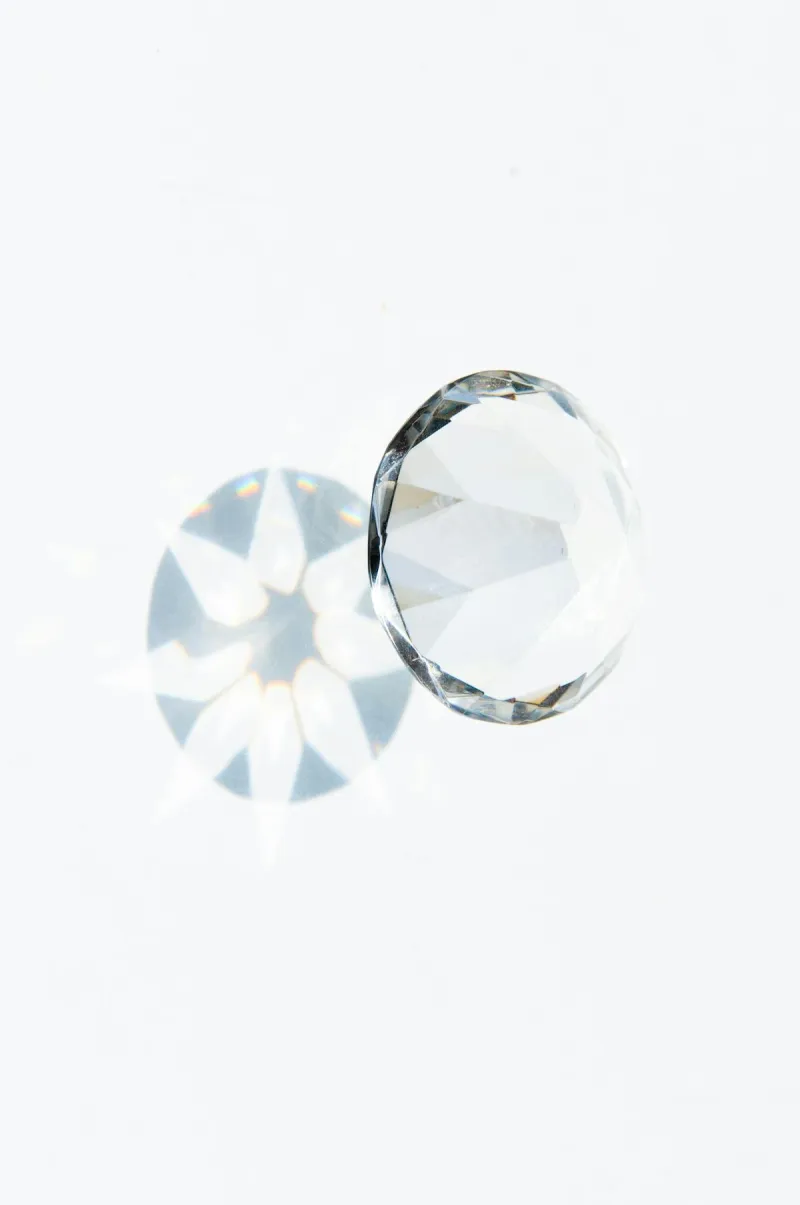
Of all the factors that influence a diamond's beauty, cut is universally regarded as the most important. A well-cut diamond captures light, bends it through its interior, and returns it to the viewer as a dazzling display of brilliance, fire, and scintillation. Conversely, even a diamond with perfect colour and clarity will look dull and lifeless if it is poorly cut. This guide explains what diamond cut means, how it is graded, and how to use cut quality to get the most beautiful diamond within your budget.
What Does Diamond Cut Mean?
Diamond cut refers to how well a diamond's facets interact with light. It is not the same as diamond shape, which describes the outline of the stone (round, oval, pear, etc.). Cut encompasses three measurable aspects:
- Proportions: The angles and relative measurements of the diamond's facets, including table size, crown angle, pavilion angle, and depth percentage.
- Symmetry: How precisely the facets align and mirror each other across the diamond.
- Polish: The smoothness of each facet's surface after the cutting and polishing process.
Together, these elements determine how effectively the diamond handles light. When proportions are optimised, light enters the crown, bounces off the pavilion facets, and exits back through the top, creating maximum visual impact.
How Light Interacts with a Diamond
Three optical effects define a diamond's visual performance:
Brilliance
Brilliance is the total amount of white light reflected back to the observer. Diamond has a high refractive index of 2.417, which means light bends sharply as it enters the stone. In a well-proportioned diamond, this light undergoes total internal reflection off the pavilion facets and is directed upward through the table and crown facets. A diamond cut too shallow will allow light to leak out the bottom, while one cut too deep will lose light through the sides.
Fire
Fire, also known as dispersion, is the separation of white light into its component spectral colours. As light passes through the angled facets, different wavelengths bend at slightly different angles, creating flashes of red, orange, blue, and green. Diamond's dispersion value of 0.044 is moderately high among gemstones, and a well-cut stone maximises the visibility of these colour flashes.
Scintillation
Scintillation is the pattern of light and dark areas visible when the diamond, the light source, or the observer moves. It includes both the sparkle (flashes of light) and the pattern (the arrangement of bright and dark zones). A well-cut diamond produces a balanced pattern with many small, evenly distributed flashes rather than large dark areas or a few dominant bright spots.
Diamond Cut Grades
The Gemological Institute of America (GIA) grades the cut of round brilliant diamonds on a five-point scale. Other shapes, known as fancy shapes, do not receive an overall cut grade from GIA, though some laboratories like AGS do grade fancy-shape cuts.
| Cut Grade | Light Performance | Visual Impact | Price Impact |
|---|---|---|---|
| Excellent | Maximum brilliance, fire, and scintillation | Exceptional sparkle with balanced light and dark patterns | Highest premium |
| Very Good | Nearly as much brilliance as Excellent | Difficult to distinguish from Excellent without comparison | Slightly lower than Excellent |
| Good | Reflects most light but some leakage | Noticeably less lively than Very Good under close inspection | Moderate |
| Fair | Significant light leakage | Appears dull compared to well-cut stones | Below average |
| Poor | Most light escapes through bottom or sides | Visibly dark, lifeless appearance | Lowest |
Key Proportions of a Round Brilliant Diamond
The round brilliant cut has been refined through centuries of optical research. Today, GIA and AGS have identified ranges of proportions that produce the best light performance. While the ideal proportions are subject to some debate, the following ranges are widely accepted for excellent-cut round brilliants:
- Table percentage: 54% to 57% of the girdle diameter
- Crown angle: 34.0 to 35.0 degrees
- Pavilion angle: 40.6 to 41.0 degrees
- Depth percentage: 59.5% to 62.5% of the girdle diameter
- Girdle thickness: Thin to slightly thick, faceted
- Star length: 50% to 55%
- Lower half length: 75% to 80%
- Culet: None (pointed) to very small
The Relationship Between Crown and Pavilion Angles
No single proportion works in isolation. The crown angle and pavilion angle must complement each other. A steeper crown paired with a shallower pavilion can produce a balanced result, and vice versa. This interplay is why two diamonds with different individual measurements can both earn Excellent cut grades: the combination matters more than any single number.
Cut Quality for Fancy Shapes
GIA does not assign an overall cut grade to fancy-shape diamonds such as princess, oval, emerald, cushion, or pear cuts. This means buyers need to evaluate proportions themselves or rely on laboratories like AGS that do grade fancy-shape cuts. Key considerations for fancy shapes include:
- Length-to-width ratio: Affects the visual shape. For example, an oval around 1.35 to 1.50 is generally considered well-proportioned.
- Bow-tie effect: Elongated shapes like oval, marquise, and pear often show a dark bow-tie pattern across the centre. A slight bow-tie is normal, but a prominent one indicates poor light performance.
- Windowing: Step-cut shapes like emerald and Asscher can show a transparent "window" through the centre if the pavilion is too shallow.
Read our diamond shapes guide for detailed advice on evaluating each shape.
Why Cut Is Worth Prioritising
When budget is limited, most gemologists recommend prioritising cut over the other Cs. Here is why:
- A well-cut diamond can make slightly tinted colour appear whiter because the intense light return masks faint colour.
- Brilliant cut patterns can hide small inclusions that would be visible in a poorly cut stone.
- Cut has the single largest impact on the "wow factor" that people notice at arm's length.
- Unlike colour and clarity, which can be subjectively acceptable at lower grades, a poor cut is always visible.
Hearts and Arrows
Some round brilliant diamonds exhibit a hearts and arrows pattern when viewed through a specialised scope. When viewed from the pavilion side, eight symmetrical heart shapes appear; from the crown side, eight arrow shapes are visible. This pattern indicates exceptionally precise symmetry and is considered a hallmark of superior cutting. However, hearts and arrows alone do not guarantee ideal proportions, so it should be evaluated alongside the cut grade and individual measurements.
How to Evaluate Cut When Shopping
Follow these practical steps to ensure you select a well-cut diamond:
- For round brilliants, insist on a GIA Excellent or AGS Ideal cut grade.
- Check the proportions on the grading report and compare them to the recommended ranges above.
- Look at high-resolution images or videos of the diamond. A well-cut stone will show strong light return and even scintillation.
- For fancy shapes, compare the length-to-width ratio and look for evidence of bow-tie or windowing effects.
- Consider an ASET (Angular Spectrum Evaluation Tool) or Idealscope image, which visually maps how the diamond handles light from different angles.
For a complete purchasing framework, visit our how to choose a diamond guide.
Frequently Asked Questions
Is cut the same as shape?
No. Shape describes the outline of the diamond (round, princess, oval, etc.), while cut refers to how well the diamond's facets are proportioned, aligned, and polished to interact with light. A round diamond can have an Excellent or Poor cut grade.
Does cut affect how big a diamond looks?
Yes. A diamond cut too deep will carry more of its weight below the girdle, making it appear smaller from above than a well-proportioned stone of the same carat weight. Conversely, a shallow cut may look larger face-up but will leak light and appear dull.
Should I always buy an Excellent cut?
For round brilliants, Excellent or Very Good cut is strongly recommended. The price difference between Excellent and Very Good is typically modest, but the visual difference between Very Good and Good can be noticeable. For fancy shapes without a GIA cut grade, rely on images, videos, and proportion analysis.
What is the most important proportion to check?
The pavilion angle has the greatest influence on light return. If it is too steep, light escapes through the sides; too shallow, and light leaks out the bottom. However, it works in tandem with crown angle, so always evaluate both.