Diamond Certification: Understanding Grading Reports and Which Labs to Trust
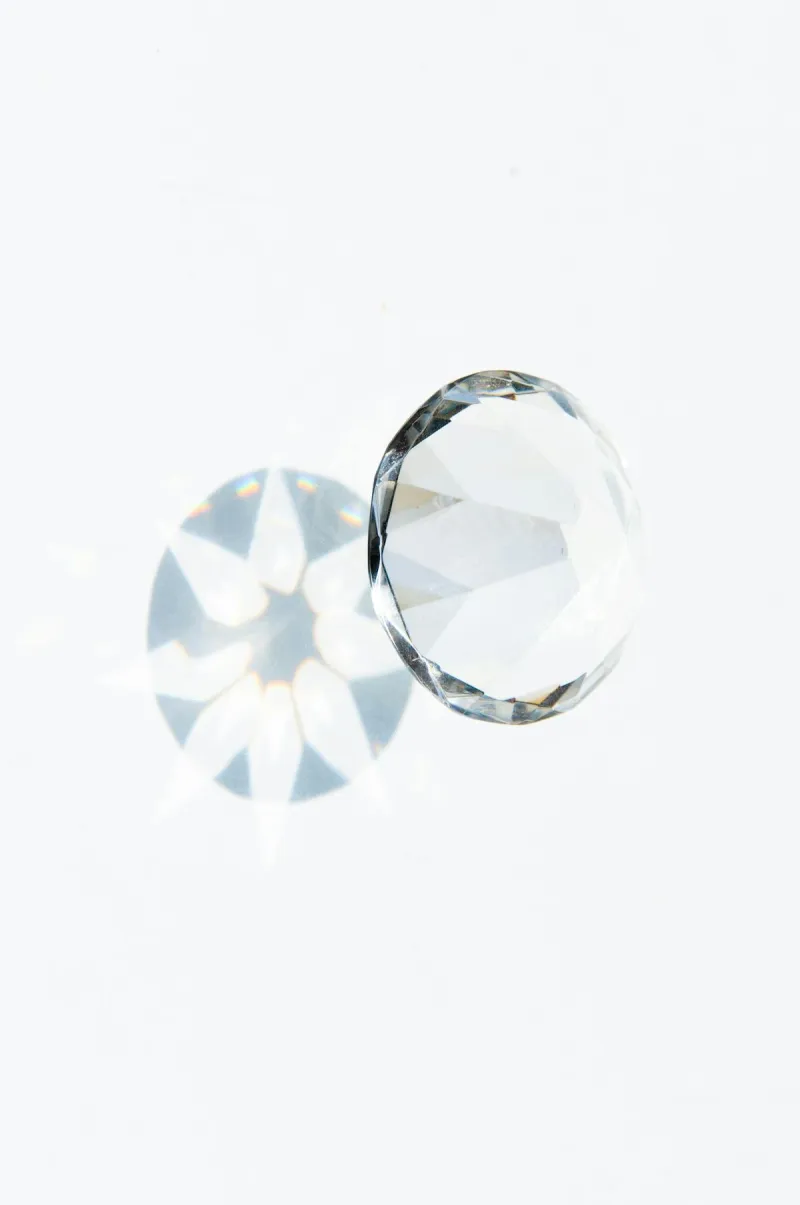
A diamond certification, more accurately called a grading report, is an independent assessment of a diamond's quality characteristics. Issued by a gemological laboratory, the report documents the diamond's carat weight, colour grade, clarity grade, cut grade, proportions, fluorescence, and other identifying features. For any significant diamond purchase, a grading report from a reputable lab is strongly recommended. It helps you compare stones more objectively and reduces the risk of overpaying. This guide explains how diamond grading works, compares major laboratories, and helps you read and use a grading report confidently.
What Is a Diamond Grading Report?
A grading report is a detailed document that describes a diamond's physical and optical characteristics based on standardised criteria. It is not an appraisal (which assigns a monetary value) and it is not a guarantee of beauty (a diamond can have high grades on paper but poor real-world appearance if certain factors align unfavourably). Think of it as a scientific assessment that provides an objective framework for comparing diamonds.
What a Grading Report Includes
- Report number: A unique identifier that can be verified online through the issuing laboratory.
- Shape and cutting style: The diamond's shape (round brilliant, princess, etc.) and faceting pattern.
- Measurements: The diamond's dimensions in millimetres, including minimum and maximum diameter (for rounds) or length, width, and depth (for fancy shapes).
- Carat weight: Measured to the hundredth of a carat.
- Colour grade: Based on the D-to-Z scale.
- Clarity grade: Based on the FL to I3 scale.
- Cut grade: For round brilliants at GIA; older AGS reports may also include cut and light-performance terminology that differs from current GIA wording.
- Proportions: Table percentage, depth percentage, crown angle, pavilion angle, star length, lower half length, girdle thickness, and culet size.
- Polish and symmetry grades: Assessed from Excellent to Poor.
- Fluorescence: The strength and colour of the diamond's reaction to UV light.
- Clarity plot: A diagram showing the type and location of inclusions and blemishes.
- Comments: Any additional characteristics or observations.
Major Diamond Grading Laboratories
Not all laboratories apply grading standards with equal consistency. The reputation and strictness of the lab directly affect how much you can trust the grades on the report and, consequently, how much you should pay. It is also important to distinguish between active grading labs, legacy reports that remain in circulation, and supplementary cut-analysis documents.
| Laboratory | Strictness | Best Known For | Recommendation |
|---|---|---|---|
| GIA (Gemological Institute of America) | Most consistent and strict | Natural diamonds; the global industry standard | Strongly recommended for natural diamonds |
| AGS / AGS Ideal | Highly respected in legacy reports; now encountered via GIA integration | Cut grading and light performance analysis | Useful if reviewing an older AGS report or a current AGS Ideal Report by GIA |
| IGI (International Gemological Institute) | Moderate; occasionally grades higher than GIA | Lab-grown diamonds; widely used in retail | Good for lab-grown diamonds; less reliable than GIA for natural |
| HRD (Hoge Raad voor Diamant) | Moderate to strict | European market; based in Antwerp | Acceptable in Europe; less recognised globally |
| EGL (European Gemological Laboratory) | Less strict; inconsistent across locations | Budget diamonds; multiple independent locations | Avoid for significant purchases; grades often inflated |
| GSI (Gemological Science International) | Less strict | Chain retailers | Approach with caution; compare against GIA standards |
GIA and AGS Terminology: A Closer Look
Many buyers still encounter AGS language in older reports and online advice, so it is useful to understand how it relates to current GIA reporting. Historically, GIA and AGS were both highly respected, but they were not identical products. Today, AGS terminology appears mainly in legacy documents and in GIA's AGS Ideal cut-related reporting.
- Grading scale: GIA uses descriptive terms such as Excellent and Very Good, while legacy AGS reports used a numerical scale from 0 (Ideal) to 10 (Poor).
- Cut analysis: AGS built a strong reputation around cut grading and light performance. Buyers may still see those concepts referenced when reviewing older reports or GIA materials tied to AGS Ideal reporting.
- Practical takeaway: For current natural-diamond grading, GIA remains the clearest benchmark. If a seller references AGS, check whether the document is an older AGS report or a current GIA-issued report with AGS Ideal content.
Why Lab Choice Matters for Price
The grading laboratory has a direct impact on price because the diamond market trusts some labs more than others. A diamond graded G colour, VS1 clarity by GIA is generally worth more than an identically graded diamond from EGL, because the EGL diamond may actually be one to two grades lower by GIA standards. This means an EGL-graded G/VS1 might truly be an H or I colour and SI1 clarity by GIA's more consistent criteria.
When comparing diamonds from different labs, always mentally adjust the less strict lab's grades downward. Better yet, focus on strong documentation from reputable current labs for natural stones, and evaluate IGI carefully for lab-grown diamonds.
How to Read a GIA Grading Report
A GIA report is divided into several sections. Here is how to interpret the key areas:
The Proportions Diagram
This section shows the diamond's profile with key measurements annotated: table percentage, depth percentage, crown angle, pavilion angle, and girdle thickness. Compare these against recommended ranges for the shape. For round brilliants, look for a table of 54-57%, crown angle of 34-35 degrees, and pavilion angle of 40.6-41.0 degrees for optimal light performance.
The Clarity Plot
The clarity plot is a simple diagram of the diamond showing inclusions (in red) and blemishes (in green). Each symbol represents a specific type of characteristic. A key on the report explains what each symbol means. Use this plot to understand where inclusions are located and whether they fall in visible positions under the table or are hidden near the girdle.
Verifying a Report
Every GIA report includes a unique report number. You can verify any report by entering this number on the GIA website. The online record should match the physical report exactly. If a seller cannot provide verification, proceed with extreme caution.
Laser Inscription
Many grading labs offer laser inscription of the report number on the diamond's girdle. This microscopic inscription is invisible to the naked eye but can be viewed under magnification. It serves as a permanent link between the diamond and its grading report, providing an extra layer of security and identification. However, inscription is not universal across all report types, so always confirm whether a specific stone has been inscribed rather than assuming it has.
Certification for Lab-Grown Diamonds
Lab-grown diamonds are commonly sold with independent grading documentation, but you should not assume every lab describes them the same way it describes natural diamonds. IGI remains widely used in retail for lab-grown stones. GIA also grades lab-grown diamonds, but its current reporting uses descriptive terminology rather than simply mirroring the full natural-diamond grading nomenclature. Lab-grown reports should clearly disclose that the stone is laboratory-grown. For more on this topic, see our natural vs. lab diamonds comparison.
Common Certification Mistakes
- Assuming all reports are equal: The grading standards vary significantly between laboratories. Always consider the source.
- Treating the report as a beauty guarantee: A report tells you the grades, not how the diamond looks in real life. Two diamonds with identical grades can look different due to subtle differences in light performance and inclusion placement.
- Buying without a report: Uncertified diamonds cannot be objectively evaluated, making it impossible to know if you are getting fair value.
- Not verifying online: Always check the report number against the laboratory's online database to confirm authenticity.
For more on what to watch out for, see our diamond buying mistakes guide.
Frequently Asked Questions
Is GIA the best diamond grading lab?
GIA is widely regarded as the most consistent and trusted laboratory for natural diamond grading. AGS remains important historically for cut analysis, but buyers today will usually encounter either legacy AGS reports or GIA material that incorporates AGS Ideal content. For lab-grown diamonds, IGI is still widely used in retail. The best report depends on the stone and the issuing lab.
Does a diamond need to be certified?
Certification is not legally required, but it is strongly recommended for any diamond of significant value. Without an independent grading report, you have no objective way to verify the diamond's quality or compare it fairly to other stones.
How much does diamond certification cost?
Grading fees vary by lab and diamond size. GIA fees typically range from around 50 to several hundred pounds depending on the services requested and the stone's carat weight. The cost is usually absorbed into the diamond's retail price.
Can a diamond be re-certified by a different lab?
Yes. A diamond can be submitted to any laboratory for grading at any time. However, be aware that grades may differ between labs due to their varying standards. A diamond graded G colour by EGL might receive an H or I grade from GIA.