Diamond Carat Weight: What It Really Means and How to Buy Smart
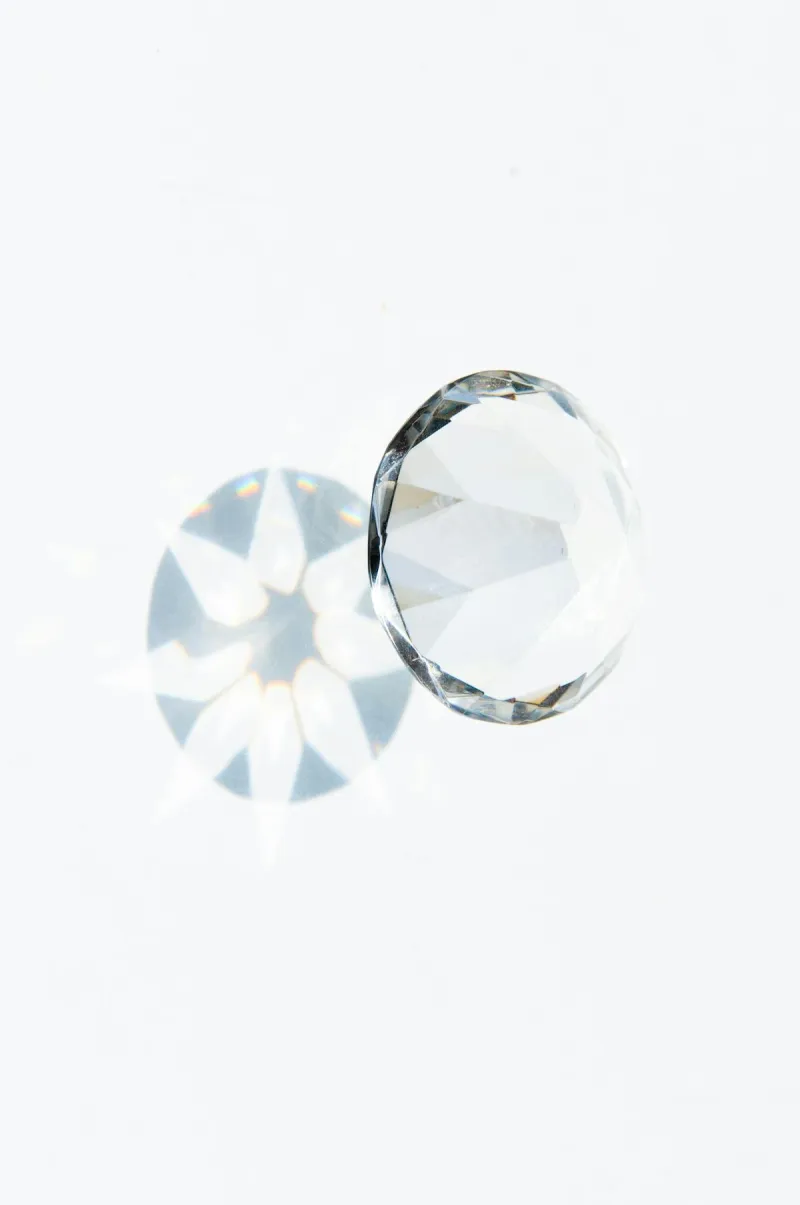
Carat weight is often the first specification people ask about when shopping for a diamond, yet it is also one of the most misunderstood. Carat measures a diamond's weight, not its physical size. Two diamonds of the same carat weight can look noticeably different depending on their cut proportions, shape, and how they distribute weight. This guide explains the carat system, how weight translates to visual size, how carat affects price, and proven strategies for maximising perceived size without blowing your budget.
What Is a Carat?
A carat is the standard unit of weight for diamonds and other gemstones. One carat equals 200 milligrams, or 0.2 grams. The word "carat" derives from the carob seed, which ancient gem traders used as a counterbalance on scales because they believed each seed had a uniform weight (they do not, but the name stuck).
Carats are divided into 100 points. A half-carat diamond weighs 50 points (0.50 ct), and a quarter-carat diamond weighs 25 points (0.25 ct). This point system allows very precise measurements, which matter because even small weight differences can affect price significantly near certain thresholds.
Carat Weight vs. Visual Size
Because carat measures weight rather than dimensions, a one-carat diamond does not look exactly twice as large as a half-carat diamond when viewed from above. The visual impression depends on where the weight is distributed:
- Well-proportioned diamonds spread their weight evenly between the crown and pavilion, maximising face-up surface area for their carat weight.
- Deep-cut diamonds carry extra weight in the pavilion, resulting in a smaller face-up appearance than their carat weight suggests.
- Shallow-cut diamonds push weight toward the crown, making the diamond look larger but often at the expense of brilliance due to light leakage.
This is why cut quality matters so much. A well-cut 0.90-carat diamond can look the same size as a poorly cut 1.00-carat diamond, while also being more brilliant and less expensive.
Average Face-Up Dimensions by Carat Weight
| Carat Weight | Round Brilliant Diameter (mm) | Approximate Size Reference |
|---|---|---|
| 0.25 ct | 4.1 | Slightly larger than a grain of rice width |
| 0.50 ct | 5.1 | About the width of a pencil eraser |
| 0.75 ct | 5.8 | Between eraser and standard pea size |
| 1.00 ct | 6.4 | Approximately the width of a standard pea |
| 1.50 ct | 7.3 | Noticeably larger than one carat |
| 2.00 ct | 8.1 | About the diameter of a standard pencil |
| 3.00 ct | 9.3 | Substantial presence on any ring |
How Carat Weight Affects Price
Diamond prices do not increase linearly with carat weight. Instead, they rise exponentially because larger rough diamonds are much rarer than smaller ones. The price per carat jumps significantly at certain popular weight thresholds known as magic numbers.
Magic Numbers and Price Jumps
The most notable price jumps occur at 0.50, 0.75, 1.00, 1.50, and 2.00 carats. A diamond weighing exactly 1.00 carat can cost 15 to 20 percent more per carat than one weighing 0.95 carats, even though the five-point difference is invisible to the naked eye. This happens because demand concentrates at round numbers, and cutters often sacrifice optimal proportions to retain enough weight to hit these thresholds.
Buying Just Below Magic Numbers
One of the smartest strategies in diamond shopping is to buy just below a magic number. A 0.90 to 0.99 carat diamond looks virtually identical to a 1.00-carat diamond face-up but can save you hundreds or even thousands of pounds. Apply the same logic at every threshold: 0.47 instead of 0.50, 1.90 instead of 2.00, and so on.
Carat Weight and Diamond Shape
Different diamond shapes distribute weight in different ways, which affects how large they appear per carat:
- Elongated shapes (oval, marquise, pear) typically have a larger face-up surface area than round diamonds of the same carat weight, making them appear bigger.
- Square shapes (princess, cushion, Asscher) fall somewhere in between, depending on their depth.
- Round brilliants are the standard reference point. Their symmetrical proportions mean weight is distributed evenly.
- Emerald cuts can vary widely. A well-proportioned emerald cut looks elegant and large, but a deep one hides weight below the surface.
If maximising visual size is a priority, consider an oval or marquise shape. They offer more surface area per carat and often cost less than round brilliants.
Total Carat Weight (TCW)
When a piece of jewellery features multiple diamonds, the combined weight of all stones is called the total carat weight (TCW). A ring described as "1.50 ct TCW" might contain a 1.00-carat centre stone and 0.50 carats of accent diamonds. Always ask for the weight of the centre stone separately, as total carat weight can be misleading. A ring with 1.50 ct TCW from many small stones will look very different from one with a single 1.50-carat diamond.
How to Maximise Perceived Size
Beyond buying smart carat weights, several other factors can make your diamond appear larger:
- Choose an excellent cut: A well-proportioned diamond reflects maximum light, creating a larger visual impression.
- Select a halo setting: A ring of small diamonds around the centre stone adds to the overall spread without increasing the centre stone's carat weight or price significantly.
- Opt for a slim band: A thinner band makes the centre diamond appear proportionally larger.
- Consider bezel settings carefully: While bezel settings protect the diamond, the metal rim can visually reduce the apparent size. Prong or claw settings expose more of the diamond's surface.
- Choose white metal: Platinum or white gold reflects light around the diamond, making it look brighter and more prominent.
For more setting and design advice, visit our jewellery types section.
Carat Weight and the Other 3Cs
Carat weight should never be considered in isolation. A large diamond with a poor cut will look dull. A large diamond with a low clarity grade may have visible inclusions. And colour becomes more noticeable as carat weight increases because there is more material for light to pass through.
The most effective approach is to set a target carat range, then optimise cut first, followed by colour and clarity. Our how to choose a diamond guide provides a step-by-step framework for balancing all four Cs.
Frequently Asked Questions
Is a 1-carat diamond a good size?
One carat is the most popular size for engagement ring centre stones and provides an excellent balance of visual impact and affordability. It is large enough to be eye-catching without being excessively expensive. However, the right size depends on your partner's finger size, personal preferences, and budget.
Does carat mean the same as size?
No. Carat is a unit of weight (1 carat = 200 mg). Two diamonds of the same carat weight can have different face-up dimensions depending on how they are cut. A well-cut diamond maximises visible surface area, while a deep-cut diamond hides weight below the girdle.
Why are prices so much higher at exactly 1.00 carat?
Demand spikes at psychologically significant thresholds like 0.50, 1.00, and 2.00 carats. Cutters aim to produce stones at these exact weights because they command higher per-carat prices. Buying just below these thresholds (e.g., 0.90-0.99 ct) often provides nearly identical appearance at a significantly lower cost.
How does finger size affect how big a diamond looks?
A diamond appears proportionally larger on a smaller finger. A 1.00-carat diamond on a size-4 finger will look more prominent than the same diamond on a size-8 finger. Consider your partner's hand proportions when deciding on carat weight.