Are Diamonds Rare? The Full Truth About Diamond Scarcity
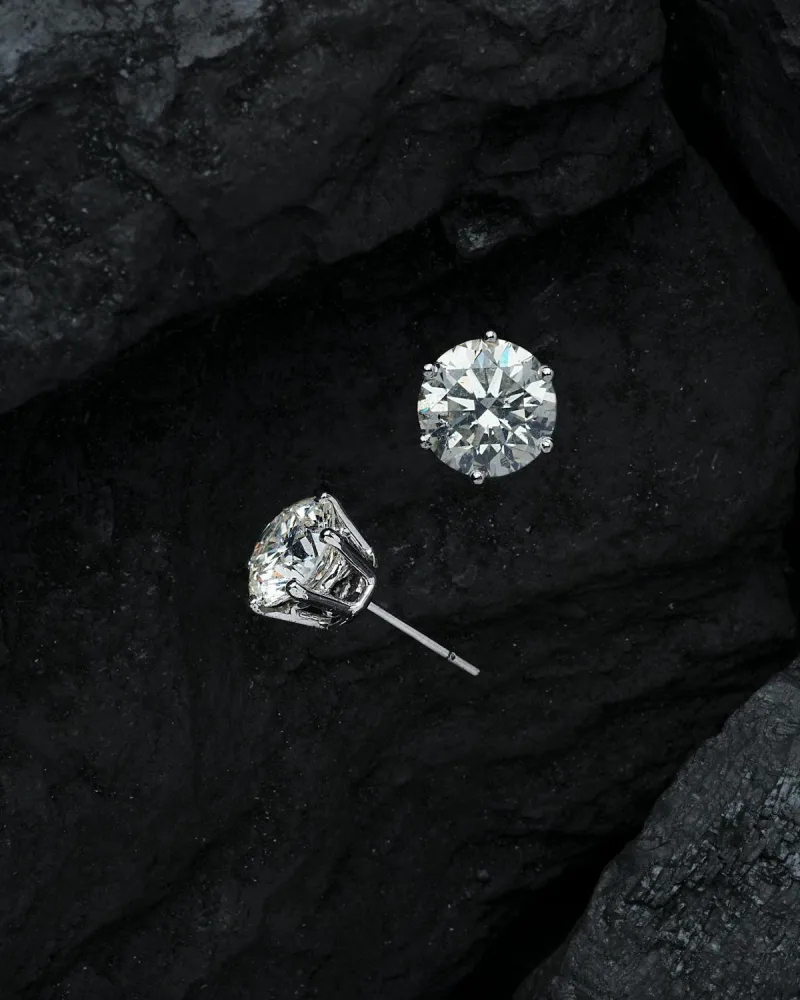
The question of whether diamonds are rare does not have a simple yes or no answer. It depends on what kind of diamond you are talking about, what quality level you mean, and how you define rarity. The popular narrative that diamonds are artificially scarce due to industry manipulation is an oversimplification. The reality is far more nuanced. This guide explores the geological, economic, and market factors that determine diamond rarity and helps you understand how scarcity affects the price you pay.
The Short Answer
Small, low-quality diamonds are not particularly rare. The Earth contains significant quantities of diamond, and roughly 130 million carats of rough diamond are mined annually. However, large, high-quality gem diamonds are genuinely scarce. The percentage of mined diamonds suitable for fine jewellery is small, and within that subset, diamonds with top colour, clarity, and size specifications become exponentially rarer.
Geological Rarity
From a geological perspective, the conditions required to form a diamond are remarkably specific:
- Extreme depth: Diamonds form 150 to 700 kilometres below the Earth's surface, far deeper than any mine can reach directly.
- Extreme conditions: Temperatures above 1,000 degrees Celsius and pressures of 45 to 60 kilobars are needed.
- Carbon source: Pure carbon must be available in the right chemical environment.
- Volcanic transport: A specific type of deep-source volcanic eruption must occur to carry diamonds to the surface before they convert to graphite.
- Survival: The diamonds must survive the violent journey through the mantle and crust without being destroyed.
These requirements make diamond formation a genuinely rare geological event. Most kimberlite pipes do not contain economically viable quantities of diamonds, and many contain no diamonds at all. Learn more about this process in our how diamonds are mined guide.
The Quality Pyramid
Of all diamonds mined, only a small fraction are suitable for jewellery:
| Category | Approximate Share of Production | Rarity Level |
|---|---|---|
| Industrial grade (cutting, grinding) | ~80% | Common |
| Near-gem quality (low-grade jewellery) | ~10-15% | Moderately available |
| Gem quality (fine jewellery) | ~5-10% | Scarce |
| High gem quality (D-F, VVS+, Excellent cut) | <1% | Rare |
| Large high-quality gems (2+ ct, top grades) | <0.1% | Very rare |
| Fancy colour diamonds (blue, pink, red) | <0.01% | Extremely rare |
This pyramid illustrates why diamond prices increase exponentially with size and quality. A one-carat D-colour, Flawless diamond is not merely twice as expensive as a half-carat stone of the same quality; it can be four to five times the price because it is disproportionately rarer.
The De Beers Factor
No discussion of diamond rarity is complete without addressing De Beers. From the late 1800s through most of the 20th century, De Beers controlled the majority of the world's rough diamond supply. Through strategic stockpiling and controlled release of diamonds to the market, De Beers maintained stable prices and cultivated the perception of diamonds as rare and valuable.
Has Diamond Supply Been Artificially Restricted?
Historically, yes. De Beers' Central Selling Organisation (CSO) managed roughly 80 percent of the global rough diamond supply and carefully controlled how much reached the market. However, the landscape has changed dramatically:
- De Beers' market share has declined from 80+ percent to roughly 30 percent.
- Major producers like Russia's ALROSA and Canadian mines operate independently.
- Multiple trading channels now exist outside De Beers' sightholding system.
- Antitrust actions have reduced De Beers' ability to control supply.
While the industry's history of supply management is real, today's diamond market is far more competitive and transparent than it was during De Beers' peak dominance.
Comparing Diamond Rarity to Other Gemstones
Some gemstones are genuinely rarer than diamonds in geological terms:
- Alexandrite: Rarer than diamond, with very limited mining sources.
- Paraiba tourmaline: Found in only a handful of locations worldwide.
- Red beryl (bixbite): One of the rarest gemstones on Earth, found only in Utah.
- Musgravite: Fewer than ten gem-quality specimens were known for decades.
However, diamond's combination of extreme hardness, exceptional optical properties, and cultural significance keeps it at the top of the gemstone hierarchy by value, even though it is not the rarest mineral. Explore other precious stones in our gemstones section.
Lab-Grown Diamonds and Rarity
The emergence of lab-grown diamonds has fundamentally changed the rarity equation. Lab-grown diamonds can be produced in virtually unlimited quantities, limited only by manufacturing capacity and energy. This unlimited supply is a major factor in their dramatically lower prices and declining resale values.
Natural diamond proponents argue that the finite, non-renewable nature of natural diamonds gives them inherent value that lab-grown stones cannot match. Lab-grown advocates counter that identical beauty at a lower price is a more rational value proposition. For a full comparison, see our natural vs. lab diamonds guide.
How Rarity Affects Pricing
Diamond pricing reflects rarity at every level of the 4Cs:
- Carat weight: Prices increase exponentially, not linearly, because larger rough diamonds are disproportionately rarer.
- Colour: Truly colourless (D) diamonds are much rarer than near-colourless (G-J) stones, commanding significant premiums.
- Clarity: Flawless and Internally Flawless diamonds represent less than 1 percent of production.
- Cut: While cut is human-controlled, producing an Excellent cut requires sacrificing more rough material, which adds to cost.
Our diamond pricing guide breaks down these factors in detail.
Are Diamonds a Good Store of Value?
Natural diamonds, particularly rare specimens, can retain value better than ordinary commercial stones. However, typical engagement-ring-quality diamonds are not reliable short-term investments. Retail markups and resale friction mean most consumer stones resell for materially less than their original purchase price. Exceptional stones, such as large fancy colour diamonds, belong to a very small specialist segment of the market.
Frequently Asked Questions
Are diamonds rarer than gold?
In terms of total quantities, gold is rarer than diamond by weight. However, gem-quality diamonds of significant size are quite rare, and large, high-quality diamonds are rarer than equivalent quantities of gold by market value.
Will diamonds become more or less rare over time?
Natural diamond deposits are finite and non-renewable. As existing mines are depleted and fewer new deposits are discovered, natural gem-quality diamonds are expected to become rarer over time. Lab-grown diamonds, however, will become more abundant.
Are fancy colour diamonds really that rare?
Yes. Natural fancy colour diamonds, particularly blue, pink, and red, are extraordinarily rare. Only about one in 10,000 carats of gem-quality production qualifies as fancy colour. Red diamonds are the rarest, with fewer than 30 true red diamonds known to exist.
Does rarity always equal value?
Not necessarily. Value depends on demand as well as rarity. Diamonds are valuable because they combine rarity with desirability, driven by their beauty, durability, cultural significance, and effective marketing. A mineral that is extremely rare but lacks visual appeal or practical use may have little commercial value.