Diamond Pricing Guide: Understanding What Drives the Cost
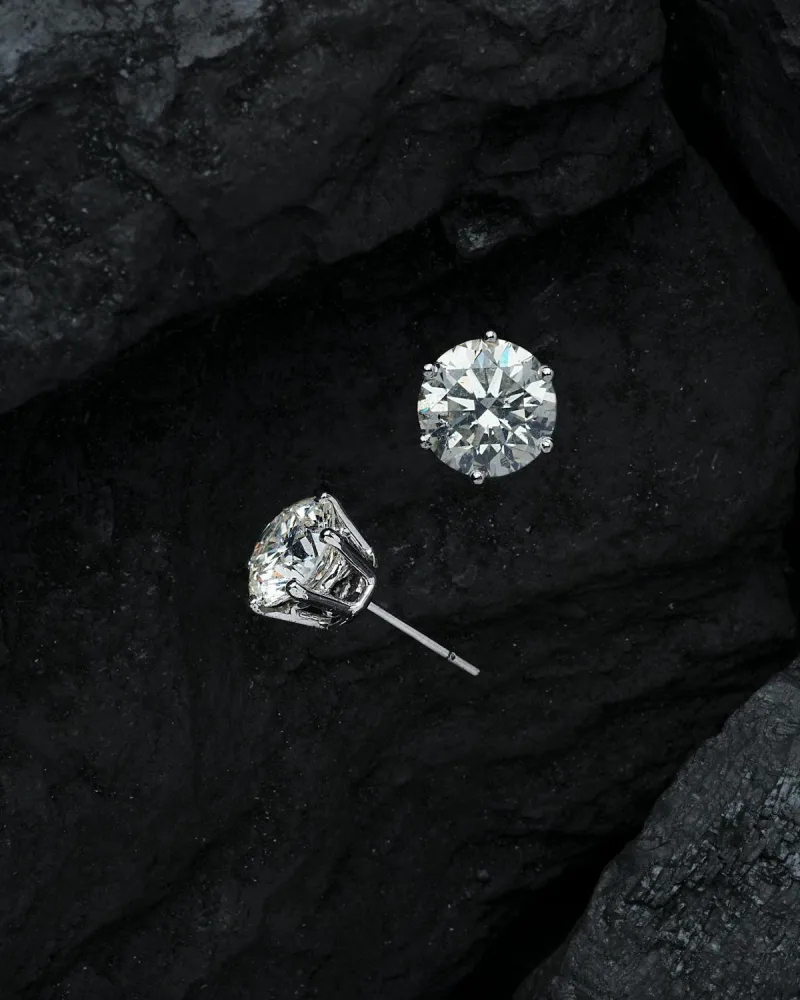
Diamond pricing can seem opaque and arbitrary to the uninitiated buyer. Two diamonds that look similar can differ in price by thousands of pounds, while seemingly minor specification changes can have dramatic effects on cost. This guide demystifies diamond pricing by explaining how each of the 4Cs, shape, certification, fluorescence, and market dynamics interact to determine the price you pay. With this knowledge, you can find the best possible diamond within any budget.
How Diamond Prices Are Set
Diamond pricing starts with industry price lists, most notably the Rapaport Diamond Report, which publishes benchmark prices for round brilliant diamonds based on carat weight, colour, and clarity. These prices are updated weekly and serve as a reference point for the wholesale trade. Actual transaction prices typically fall at a discount or premium to the Rapaport list depending on specific stone characteristics, market conditions, and the buyer-seller relationship.
Retail prices include additional markups for the retailer's overhead, marketing, and profit margin. Online retailers generally have lower markups (20 to 40 percent above wholesale) compared to high-street jewellers (50 to 100+ percent above wholesale) due to lower operating costs.
How Each of the 4Cs Affects Price
Carat Weight: The Biggest Price Driver
Carat weight has the most significant impact on price because larger rough diamonds are exponentially rarer than smaller ones. Prices do not increase linearly; they jump at psychologically important thresholds known as magic numbers.
- A diamond just under 1.00 carat (e.g., 0.95 ct) can cost 15 to 20 percent less per carat than one that hits exactly 1.00 carat.
- Similar price jumps occur at 0.50, 0.75, 1.50, 2.00, 3.00, and 5.00 carats.
- The price per carat increases with each weight category because the rarity of the rough material increases.
Read our full carat weight guide for strategies on buying just below these thresholds.
Cut: Premium for Performance
Cut quality affects price at every weight level. For round brilliants, the GIA Excellent cut grade commands the highest prices. The premium for Excellent over Very Good is typically 10 to 15 percent, while the gap between Very Good and Good can be 15 to 25 percent. For fancy shapes, which do not receive GIA cut grades, well-proportioned stones with minimal bow-tie effects command premiums over poorly cut ones.
Colour: The D-to-Z Premium Curve
Colour premiums are steepest at the top of the scale. Moving from D to E colour typically reduces the price by 10 to 15 percent. From E to F, another 5 to 10 percent. From F to G, 10 to 15 percent. From G to H, 5 to 10 percent. Below H, the discounts per grade become smaller in absolute terms but larger as a percentage of the lower total price.
Clarity: Diminishing Returns at the Top
The price premium for Flawless over VVS1 is significant but provides no visible benefit. The premium for VVS1 over VS1 is substantial but also invisible to the naked eye. The most efficient value lies in the VS2 to SI1 range, where the stone appears eye-clean but costs dramatically less than higher clarity grades.
Price Comparison by Specification
| Specification | Approx. Natural Price (GBP) | Approx. Lab-Grown Price (GBP) | Value Notes |
|---|---|---|---|
| 0.50 ct, G, VS2, Excellent | 1,200-1,800 | 200-400 | Entry-level quality engagement diamond |
| 1.00 ct, G, VS2, Excellent | 4,500-7,000 | 600-1,200 | Most popular engagement ring specification |
| 1.00 ct, D, VVS1, Excellent | 9,000-14,000 | 1,200-2,000 | Premium spec; no visible improvement over G/VS2 |
| 1.50 ct, G, VS2, Excellent | 8,000-13,000 | 900-1,800 | Significant visual presence |
| 2.00 ct, G, VS2, Excellent | 16,000-28,000 | 1,500-3,000 | Premium size; steep price jump at 2.00 ct |
Note: Prices are approximate and vary by retailer, shape, and market conditions. Based on round brilliant diamonds. Prices current as of early 2026.
How Shape Affects Price
Round brilliant diamonds are the most expensive per carat because they waste the most rough material during cutting and because demand is highest. All fancy shapes are less expensive, with savings ranging from 20 to 40 percent depending on the shape and current market trends.
- Oval and cushion: Currently in high demand; typically 20 to 30 percent less than round.
- Princess: 20 to 30 percent less; retains more of the rough crystal.
- Emerald and Asscher: 25 to 35 percent less; requires higher colour and clarity grades, which can offset savings.
- Pear and marquise: 25 to 35 percent less; lower demand means better deals.
See our diamond shapes guide for a full comparison.
How Certification Affects Price
The grading laboratory significantly influences price. A GIA-certified diamond commands a premium over one graded by less consistent labs because buyers trust GIA's strict standards. A diamond graded G/VS1 by EGL might actually be H/SI1 by GIA standards, meaning the EGL stone is overpriced for its true quality.
Always compare diamonds graded by the same lab, or mentally adjust grades when comparing across labs. Our certification guide explains which labs to trust.
Fluorescence and Price
Fluorescence typically reduces price, even when it has no negative visual impact. This creates value opportunities for informed buyers:
- Strong fluorescence in D-F colour: 10 to 15 percent discount (may cause haziness; inspect carefully)
- Medium fluorescence in G-H colour: 3 to 7 percent discount (rarely any visual impact)
- Medium or strong fluorescence in I-M colour: 5 to 10 percent discount (may actually improve apparent colour)
Learn more in our fluorescence guide.
Natural vs. Lab-Grown Pricing
Lab-grown diamonds cost 60 to 85 percent less than natural diamonds of equivalent specifications. This gap has widened as lab-grown production has scaled up and technology has improved. For buyers focused on getting the most beautiful stone possible within a fixed budget, lab-grown diamonds are transformative. For buyers who value natural rarity and long-term resale potential, natural diamonds remain the choice despite the higher price. See our complete natural vs. lab comparison.
Strategies to Maximise Value
- Prioritise cut: Cut has the greatest impact on beauty. Never compromise below Very Good.
- Buy just below magic numbers: 0.90 instead of 1.00, 1.90 instead of 2.00.
- Choose near-colourless: G-I colour offers the best balance of appearance and price.
- Find eye-clean clarity: VS2 or SI1 saves money compared to VVS or FL.
- Consider fancy shapes: Save 20 to 40 percent over round brilliant.
- Shop online: Lower overhead means lower prices; just ensure GIA/AGS certification and good return policies.
- Embrace mild fluorescence: A hidden discount that rarely affects beauty.
- Compare multiple retailers: Price differences of 15 to 30 percent are common for identical specifications.
Understanding Retail Markups
The journey from mine to retail adds several layers of markup:
- Mining and rough sales: The mining company sells rough diamonds to manufacturers.
- Cutting and polishing: Adds 30 to 50 percent to the rough cost.
- Wholesale trading: Adds 10 to 20 percent.
- Retail markup: Adds 50 to 100+ percent for brick-and-mortar; 20 to 40 percent for online retailers.
This chain explains why diamonds lose value upon resale. The retail price includes all these margins, but the resale price reflects only the wholesale market value.
Frequently Asked Questions
How much should I spend on a diamond engagement ring?
Spend what you can comfortably afford without going into significant debt. There is no universal rule. A budget of 2,000 to 5,000 pounds can buy a beautiful diamond ring, especially if you apply the value strategies outlined in this guide. Lab-grown diamonds extend any budget dramatically.
Why are diamonds from different retailers priced so differently?
Differences in overhead costs (rent, staff, marketing), grading laboratory (GIA vs. lesser labs), sourcing channels, and markup philosophy all contribute. Always compare diamonds with the same shape, cut grade, colour, clarity, carat weight, and certification lab.
Do diamond prices go up over time?
Natural diamond prices have generally increased over the long term, though with periods of decline. However, retail diamonds are not liquid investments and lose 30 to 50 percent of their retail price upon resale. Lab-grown diamond prices have been consistently falling and are expected to continue declining.
Is it cheaper to buy a diamond online?
Generally, yes. Online retailers typically offer prices 20 to 40 percent lower than brick-and-mortar jewellers for diamonds with identical specifications and certification. Ensure the online retailer provides GIA or AGS certification, high-resolution images, and a generous return policy.