Diamonds as an Investment: Are They Worth It?
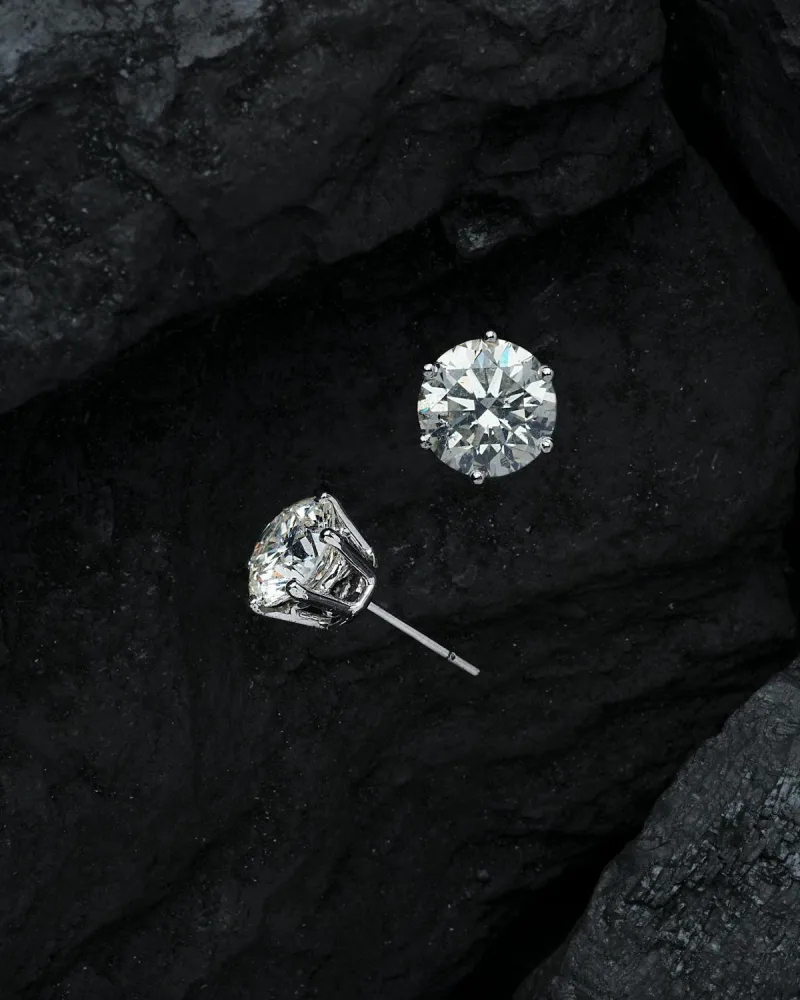
Diamonds have long been associated with wealth, permanence, and prestige. It is natural, then, that many people wonder whether buying a diamond is not only an emotional purchase but also a sound financial one. The reality is more nuanced than the marketing suggests. While some exceptional diamonds have performed strongly over long periods, the average consumer diamond is generally a weak financial asset compared with more transparent investments. This guide examines the full picture: resale friction, what collectors mean by investment-grade, and why most buyers should treat diamonds primarily as luxury purchases.
Are Diamonds a Good Investment?
The short answer is that for most buyers, diamonds are not a reliable investment. The diamond market differs from financial markets in several fundamental ways that work against the individual investor:
- High retail markup: Jewellery retailers often add substantial markups above trade pricing. The moment you walk out of the shop, your diamond is usually worth significantly less than what you paid.
- Illiquid market: Unlike stocks or gold, there is no centralised exchange where you can sell a diamond at a transparent market price. Finding a buyer often means accepting a steep discount.
- No yield: Diamonds do not pay dividends, interest, or rent. Any return comes solely from price appreciation, which must first overcome the initial markup.
- Subjective valuation: Two diamonds with identical grading report specifications can differ noticeably in appearance and desirability, making standardised pricing difficult.
That said, the picture changes somewhat for rare, exceptional stones. High-quality natural diamonds above two carats, fancy coloured diamonds, and historically significant gems are the segment most often discussed as collectible assets. The key distinction is between consumer-grade diamonds and truly rare stones traded in specialist channels.
Diamond Price History and Market Context
Diamond pricing has always been shaped by supply management, branding, shifting consumer demand, and opaque trade structures. That alone makes diamonds harder to analyse than assets with transparent exchange pricing.
Why Historical Performance Is Hard to Generalise
Historical diamond-price commentary often mixes together very different markets: retail jewellery, dealer trading, auction-grade stones, and rare coloured diamonds. These segments behave differently. A statement that may be true for a rare fancy coloured diamond sold at auction can be completely misleading for a standard one-carat engagement stone bought at retail.
What Matters More Than Broad Price Charts
For most buyers, the more important question is not whether diamonds have ever risen in price, but whether a specific stone can overcome retail markup, transaction costs, and weak liquidity. In most consumer scenarios, the answer is no. In specialist collecting scenarios, the answer can sometimes be yes, but only with rarity, documentation, and the right buying channel.
What Makes a Diamond Investment-Grade?
Not all diamonds are created equal when it comes to investment potential. Investment-grade diamonds represent a very small fraction of all diamonds mined and sold. They share several key characteristics:
| Characteristic | Investment Grade | Consumer Grade |
|---|---|---|
| Carat Weight | 2.00 ct and above, ideally 3.00 ct+ | 0.50 ct to 1.50 ct |
| Colour | D, E, or F (colourless) | G to J (near-colourless) |
| Clarity | VVS1, VVS2, or IF (Internally Flawless) | VS1 to SI1 |
| Cut | Excellent or Ideal with optimal proportions | Very Good to Excellent |
| Fluorescence | None | None to Medium |
| Certification | GIA (mandatory) | GIA, AGS, or other reputable lab |
| Shape | Round brilliant (most liquid) or classic fancy shapes | Any shape |
The logic behind these criteria is straightforward: rarity matters more than mainstream desirability when collectors allocate serious capital. Even so, meeting these specifications does not guarantee appreciation; it simply places the stone in a narrower and more defensible part of the market.
Why Larger Diamonds Appreciate More
Diamond prices do not scale linearly with carat weight. Larger stones command much higher per-carat prices because fine large diamonds are scarcer. That does not ensure appreciation, but it does help explain why larger stones sit in a more specialist and defensible segment of the market.
Natural vs. Lab-Grown Diamonds for Investment
The rise of laboratory-grown diamonds has introduced an important consideration for anyone thinking about diamonds as an investment. The practical takeaway is straightforward: lab-grown diamonds are generally poor candidates for capital preservation or speculative resale.
Why Lab-Grown Diamonds Depreciate
- Unlimited supply: Lab-grown diamonds can be produced in virtually unlimited quantities. As production technology improves and scales, the cost of manufacturing continues to fall, which puts relentless downward pressure on prices.
- Rapid price decline: Retail prices for lab-grown diamonds have fallen sharply in recent years, which weakens any resale case for existing stones.
- No scarcity value: The fundamental driver of any investment asset is scarcity. Lab-grown diamonds, by definition, are not scarce and never will be.
- Weak resale market: Many jewellers do not actively buy back lab-grown diamonds, and resale offers that do exist are often low relative to the original purchase price.
Lab-grown diamonds can be attractive for jewellery buyers who want beauty and durability at a lower price point. However, they should usually be treated as consumption purchases rather than stores of value. For a deeper comparison, read our natural vs. lab diamonds guide.
Diamonds Compared to Other Investments
To evaluate diamonds fairly as an investment, it helps to compare them directly with the most common alternative asset classes.
| Factor | Diamonds | Gold | Stocks (Index Funds) | Real Estate |
|---|---|---|---|---|
| Return Profile | Highly variable; hard to generalise | Market-linked | Market-linked | Market-linked |
| Liquidity | Very low | Very high | Very high | Low to moderate |
| Transaction Costs | Very high (markup, dealer spread) | Low (small premium over spot) | Very low (brokerage fees) | High (stamp duty, agent fees) |
| Income Generation | None | None | Dividends | Rental income |
| Storage & Insurance | Low cost, compact | Moderate (vault or safe) | None | High (maintenance, insurance) |
| Portability | Excellent | Good (small amounts) | Excellent (digital) | None |
| Inflation Hedge | Unreliable for most consumer stones | Strong | Moderate to strong | Strong |
The one area where diamonds can genuinely excel as assets is portability and value density. A single stone worth a substantial amount can be carried discreetly. That has historically mattered in niche wealth-preservation scenarios, but it is not a mainstream investment case for ordinary buyers.
The Diamond Resale Market: Key Challenges
One of the biggest obstacles to treating diamonds as an investment is the difficulty of selling them. Unlike gold, which can be sold at a transparent spot price anywhere in the world, selling a diamond involves significant friction.
The Retail-to-Resale Gap
When you buy a diamond from a jeweller, you pay the retail price, which includes the dealer's cost, overhead, profit margin, and sometimes brand premium. When you sell, you typically receive a trade-oriented price rather than the original retail price. For branded diamonds from luxury houses, the gap can be even wider, as much of the brand premium is not fully recoverable.
Where to Sell
- Diamond dealers: Professional dealers usually offer materially less than original retail price because they need room for resale margin and risk.
- Auction houses: Major auction houses like Christie's and Sotheby's handle exceptional and rare diamonds. They can achieve strong prices for remarkable stones, but fees are substantial and the channel is not practical for typical consumer diamonds.
- Online platforms: Websites specialising in pre-owned diamonds have grown in recent years, but prices remain well below retail, and the selling process can take weeks or months.
- Pawnbrokers: The least favourable option, typically offering 20% to 30% of retail value.
Certification Matters for Resale
A diamond without a GIA grading report is significantly harder to sell and will command a lower price. If you are buying with any thought of future resale, insist on a GIA-certified diamond. Other laboratory reports are less universally recognised and may not be accepted by all buyers.
Fancy Coloured Diamonds as Investments
While the investment case for standard white diamonds is weak for most buyers, fancy coloured diamonds are the segment most often cited in serious collecting and auction discussions. Natural fancy coloured diamonds are among the rarest gemstones on earth, and exceptional examples can command extraordinary prices.
The Most Valuable Colours
- Red diamonds: The rarest of all diamond colours. Fewer than 30 true red diamonds are known to exist, and they command prices exceeding £1 million per carat. The 5.11-carat Moussaieff Red sold for approximately £8 million.
- Blue diamonds: Coloured by trace amounts of boron, natural blue diamonds are exceptionally rare. Auction records show that the best examples can command extreme prices, but that does not translate cleanly into a predictable return profile.
- Pink diamonds: The closure of the Argyle mine in Australia tightened supply for a notable source of pink diamonds. That has strengthened collector interest, but pricing in this niche market can still be volatile and highly stone-specific.
- Green diamonds: Natural green diamonds coloured by radiation exposure over millions of years are very rare. The Aurora Green, a 5.03-carat vivid green, sold for £13.3 million in 2016.
- Yellow and orange diamonds: More common than other fancy colours, but vivid and intense saturations are still rare and can command strong collector interest.
Why Fancy Colours Outperform
Fancy coloured diamonds benefit from genuine scarcity and unusually strong collector interest. Blue and red diamonds are geological anomalies that appear in vanishingly small numbers. Pink diamonds also gained additional attention after Argyle's closure. Even so, this remains a small, specialist market rather than a broadly accessible investment category.
Risks of Fancy Colour Investment
Despite their strong track record, fancy coloured diamond investment carries risks. The market is small and illiquid, meaning a single large sale can move prices. Authentication and colour grading are critical, as subtle differences in saturation can mean enormous price differences. Additionally, the minimum investment is typically very high, as significant coloured diamonds rarely cost less than £50,000 and often run into the millions.
Tips for Buying Diamonds as an Investment
If you decide to pursue diamonds as part of a diversified investment portfolio, the following guidelines will help you maximise your chances of a positive outcome:
- Buy at the strongest price you can justify: Entry price matters enormously because retail markup is the main obstacle to any future gain.
- Focus on rarity: Only consider diamonds that are genuinely scarce. Common sizes and qualities have too many substitutes to behave like collectible assets.
- Prioritise strong documentation: High-level buyers usually expect top-tier laboratory reporting and clear provenance where possible.
- Avoid settings: Buy loose diamonds, not mounted jewellery. Settings add cost but not investment value, and they can obscure the diamond's true characteristics.
- Think long-term: Short-term flipping is usually undermined by transaction costs, dealer spreads, and low liquidity.
- Diversify: Never put a large percentage of your wealth into diamonds. They should be a small allocation within a broader investment portfolio, not a core holding.
- Insure your stones: Obtain specialist jewellery insurance with agreed value cover. Keep your GIA report, purchase receipt, and a recent valuation in a separate location from the diamond itself.
- Store properly: Keep diamonds in a secure safe or bank vault. While diamonds are extremely durable, they can chip if struck at certain angles, and loose stones can easily be lost.
Common Mistakes to Avoid
Many would-be diamond investors lose money by making predictable errors:
- Buying retail and expecting appreciation: Starting from a full retail price makes it very difficult to achieve a satisfactory investment outcome.
- Treating lab-grown as an investment: Lab-grown diamonds are generally poor investment assets. They can be excellent jewellery purchases, but that is a different question.
- Ignoring the four Cs: Buying a large diamond with poor colour or clarity in hopes that size alone will drive returns. Quality matters as much as carat weight.
- Buying without certification: Uncertified or poorly certified diamonds are nearly impossible to sell at fair value.
- Overconcentrating: Putting too much of your portfolio into a single illiquid asset class.
- Expecting short-term gains: Diamonds are not a trading vehicle. Transaction costs make short-term profits virtually impossible.
Frequently Asked Questions
Do diamonds appreciate in value over time?
Some rare natural diamonds have appreciated over long periods, but average consumer-grade diamonds usually do not perform well once retail markups and resale friction are considered. Fancy coloured diamonds and exceptional large stones belong to a specialist market rather than a typical consumer one.
Are lab-grown diamonds a good investment?
Lab-grown diamonds are generally poor investment candidates. Retail prices have fallen sharply in recent years, and resale demand remains weak compared with natural stones.
What is the minimum budget for a diamond investment?
There is no universal minimum budget, but genuinely collectible diamonds usually sit far above mainstream consumer price points. The exact threshold depends on rarity, colour, clarity, size, documentation, and the channel through which the stone is purchased.
Is gold a better investment than diamonds?
For most investors, gold is a significantly better alternative to diamonds. Gold has higher liquidity, lower transaction costs, transparent global pricing, and a longer track record as a store of value and inflation hedge. Diamonds offer superior portability and value density, but these advantages are only relevant in niche circumstances.
How much do you lose when you sell a diamond?
If you purchased at retail prices, you will often receive materially less than you paid when selling to a dealer. Auction sales of exceptional stones can produce stronger results, but costs and outcomes vary widely.
Conclusion
Diamonds occupy an unusual position in the investment world. For the average buyer purchasing a one-carat engagement ring from a high-street jeweller, the diamond is not an investment and should not be treated as one. The retail markup, illiquid resale market, and modest long-term appreciation of standard stones make them a poor competitor to stocks, bonds, or even gold.
However, for those with significant capital and a long-term horizon, rare natural diamonds, particularly fancy coloured stones and exceptional large whites, may belong in a speculative or collectible allocation. That is a narrow market, and success depends heavily on rarity, buying discipline, and exit channel.
The key is to approach diamond investment with clear eyes: focus on genuine rarity, strong documentation, and realistic resale assumptions. If you are primarily buying a diamond for its beauty and emotional significance, enjoy it as jewellery and treat any future appreciation as a bonus rather than an expectation. For more on understanding diamond values, explore our diamond pricing guide and diamond certification guide.