Gemstone Treatments: What Every Buyer Should Know
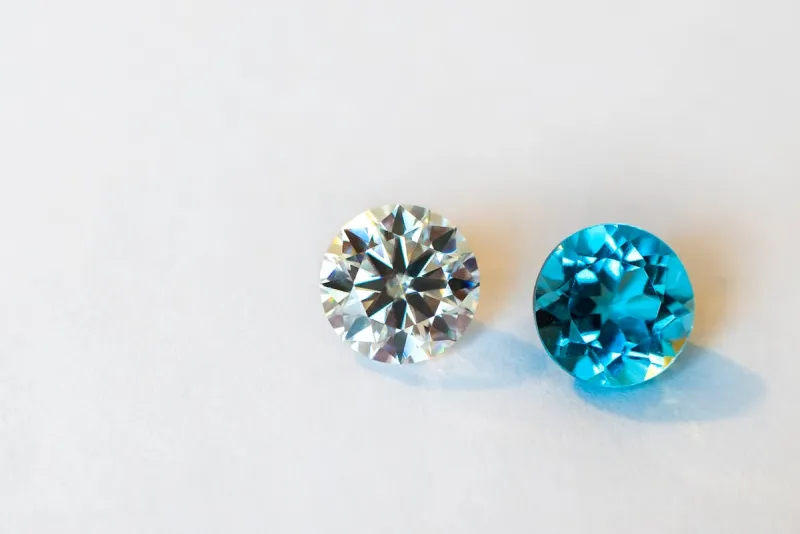
The vast majority of gemstones available on the market today have been treated in some way to enhance their appearance. By some estimates, over 90% of commercially sold coloured gemstones have undergone at least one form of treatment. From the gentle heating of sapphires to the oiling of emeralds, these processes have been part of the gem trade for centuries. Understanding gemstone treatments is essential for any buyer, as they directly influence a stone's value, durability, and care requirements. This guide explains every major treatment type, how they affect pricing, and what you should look for when purchasing treated or untreated stones.
Why Gemstones Are Treated
Gemstones are treated for several practical and commercial reasons:
- Improving colour – Many rough gemstones emerge from the earth with colour that is too pale, too dark, or unevenly distributed. Treatments can enhance, deepen, or even change the colour to make the stone more attractive and marketable.
- Enhancing clarity – Inclusions, fractures, and cloudiness are common in natural gemstones. Treatments such as oiling, resin filling, and flux healing can reduce the visibility of these imperfections.
- Increasing supply – Without treatments, the supply of fine-quality gemstones would be a fraction of what is currently available. Treatments allow lower-grade rough material to be transformed into appealing finished stones, making gemstone jewellery accessible to a wider audience.
- Meeting demand – Certain colours, such as the deep blue of London blue topaz or the vivid blue of Paraiba-type stones, are extremely rare in nature. Treatments make these colours commercially available.
It is worth noting that gemstone treatment is not inherently deceptive. Many treatments are widely accepted within the trade, provided they are properly disclosed. The key ethical issue is not whether a stone has been treated, but whether the treatment has been honestly communicated to the buyer.
Common Treatment Types
Heat Treatment
Heat treatment is the most widespread and generally accepted form of gemstone enhancement. Stones are heated to high temperatures – typically between 800 and 1,800 degrees Celsius – in controlled furnaces to improve their colour and clarity. The process mimics and accelerates the natural geological conditions that would have altered the stone over millions of years.
Heat treatment is routinely applied to:
- Sapphires – Heating can intensify blue colour, remove silk (rutile needle inclusions), and improve overall transparency. Many sapphires from Sri Lanka, Madagascar, and Thailand are heated as standard practice.
- Rubies – Heating improves colour saturation and can dissolve silk inclusions. The majority of rubies on the market, particularly those from Mozambique and Myanmar (Mong Hsu), are heat-treated.
- Tanzanite – Nearly all tanzanite is heated to transform its naturally brownish or burgundy rough into the prized violet-blue colour. Unheated tanzanite with fine blue colour is extremely rare.
- Aquamarine – Heating removes greenish or yellowish secondary hues, producing a purer blue. Almost all commercial aquamarine has been heated.
- Citrine – Much of the citrine on the market is actually heat-treated amethyst or smoky quartz.
Heat treatment is permanent and stable, meaning the results do not fade or degrade over time. Because it is so prevalent and widely accepted, heated gemstones are not considered significantly diminished in value compared to untreated stones of lower quality. However, an untreated gemstone of equivalent quality will always command a premium.
Oiling and Resin Filling
Oiling involves filling surface-reaching fractures and fissures with oils, waxes, or resins to improve a stone's apparent clarity. The filling material has a refractive index similar to the gemstone, which makes fractures less visible to the naked eye.
This treatment is most closely associated with emeralds. The vast majority of emeralds – by some estimates over 95% – are oiled or resin-filled, as the stone naturally contains abundant inclusions and fractures (known in the trade as the "jardin" or garden).
- Cedar oil – The traditional filling material for emeralds. It is colourless and has a refractive index close to that of emerald. Cedar oil treatment is considered minor and is widely accepted.
- Opticon and other resins – Synthetic resins such as Opticon provide a more durable fill than oil but are considered a more significant treatment. Epoxy resins with hardeners are the most stable but also the most intrusive.
Oiling is not always permanent. Over time, oils can dry out or be removed by ultrasonic cleaning or exposure to heat. Emeralds may need to be re-oiled periodically. Gemmological laboratories grade the degree of oiling from "none" to "insignificant," "minor," "moderate," and "significant" – and this grading has a direct impact on value.
Irradiation
Irradiation involves exposing gemstones to various forms of radiation – gamma rays, neutron bombardment, or electron beams – to alter their colour. The process is often followed by heat treatment to achieve the desired shade.
- Blue topaz – This is the most common example of irradiation. Natural topaz is typically colourless or very pale. Irradiation followed by heating produces the popular Sky Blue, Swiss Blue, and London Blue varieties. Virtually all blue topaz on the market has been irradiated.
- Coloured diamonds – Irradiation can produce vivid blue, green, yellow, and other fancy colours in diamonds. These are sometimes further heated to produce pink or red shades.
- Coloured quartz – Some smoky quartz and other quartz varieties are produced or enhanced through irradiation.
Irradiated gemstones are generally stable, though some colours may fade with prolonged exposure to strong light or heat. All irradiated gemstones sold commercially must meet safety standards ensuring they do not retain harmful levels of residual radiation.
Diffusion Treatment
Diffusion treatment involves heating a gemstone in the presence of chemical additives that penetrate the stone's surface or lattice structure, altering its colour. There are two main types:
- Surface diffusion – Chemicals such as titanium and iron are diffused into the outer layer of sapphires at high temperatures. The colour penetration is shallow, meaning that if the stone is chipped or re-cut, the colourless interior may be exposed. Surface-diffused sapphires have significantly reduced value.
- Lattice (bulk) diffusion – Beryllium diffusion, developed in the early 2000s, uses the small beryllium atom to penetrate much deeper into the stone – sometimes throughout the entire crystal. This treatment can turn pale or colourless sapphires into vibrant orange, yellow, or padparadscha-like colours. Because the colour penetration is deeper, lattice-diffused stones are more durable than surface-diffused ones, but they remain significantly less valuable than naturally coloured stones.
Diffusion treatment is considered a significant enhancement and must always be disclosed. Detecting it typically requires immersion in a liquid to observe colour concentration patterns, or advanced spectroscopic analysis.
Bleaching
Bleaching uses chemical agents to lighten or remove unwanted colour from a gemstone. It is most commonly applied to:
- Pearls – The majority of cultured pearls are bleached after harvest to achieve a uniform, lighter bodycolour. This is considered standard practice and is widely accepted in the trade.
- Jade (jadeite) – Bleaching with acids removes brown or yellowish staining from jade. When combined with polymer impregnation (known as "B jade"), the treatment significantly affects value and durability.
- Coral – Some coral is bleached to achieve lighter or more uniform colour.
Dyeing
Dyeing introduces coloured substances into a gemstone to alter or enhance its colour. The dye typically enters through fractures, pores, or the naturally porous structure of the material.
- Pearls – Pearls are frequently dyed to produce colours such as black, gold, or vivid pink that may not occur naturally or are rare in nature.
- Agate – Agate and other porous chalcedony varieties have been dyed for centuries. Bright blue, green, pink, and purple agates are almost always dyed.
- Jade – Jadeite may be dyed green to imitate the highly prized "imperial" colour. Dyed jade (known as "C jade") is significantly less valuable than naturally coloured material.
- Lapis lazuli, howlite, and turquoise – These porous stones are frequently dyed to deepen or alter their colour. Howlite is commonly dyed blue to imitate turquoise.
Dyed stones may fade over time, particularly with exposure to light, heat, or chemicals. Dyeing is generally considered a significant treatment and should always be disclosed.
Coating
Coating involves applying a thin layer of material to the surface of a gemstone to alter its colour or add special optical effects.
- Mystic topaz – The most well-known coated gemstone. A thin layer of titanium is deposited onto the pavilion (bottom) of a colourless topaz using a vacuum deposition process, creating a rainbow-like iridescent effect. The coating is relatively delicate and can be scratched or worn away over time.
- Coated tanzanite – Some lower-quality tanzanite is coated with a thin cobalt-coloured layer to enhance its blue colour.
- Diamond coatings – Thin optical coatings have been applied to diamonds to mask yellowish body colour, making them appear whiter. These coatings can be detected by gemmological laboratories.
Coatings are generally the least stable treatment and can be damaged by scratching, cleaning chemicals, or re-polishing. They require careful handling and should always be disclosed.
Fracture Filling
Fracture filling involves introducing a foreign substance into surface-reaching fractures to improve a gemstone's apparent clarity and sometimes to add stability.
- Rubies – Lead glass filling has become widespread, particularly in lower-grade rubies. Large amounts of lead glass can fill extensive fracture networks, dramatically improving the stone's appearance. However, lead-glass-filled rubies are fragile, require special care, and are worth a fraction of untreated or simply heated rubies.
- Diamonds – Fractures in diamonds can be filled with a high-refractive-index glass. The filling is visible under magnification as a characteristic "flash effect" – bright colours that appear when the stone is tilted. Clarity-enhanced diamonds are significantly less valuable than untreated stones of similar apparent clarity.
Fracture filling is not permanent. The filling material can be damaged by heat (during jewellery repairs, for example), ultrasonic cleaning, or exposure to acids. Fracture-filled stones require disclosure and special care.
HPHT Treatment
High Pressure, High Temperature (HPHT) treatment is used primarily on diamonds. The process subjects a diamond to extreme pressure and temperature – similar to the conditions under which natural diamonds form – to alter its colour.
- HPHT can convert certain brownish type IIa diamonds into colourless or near-colourless stones, significantly increasing their value.
- It can also produce fancy colours such as vivid yellow, green, or blue from suitable starting material.
- The treatment is permanent and stable, but it must be disclosed. Major gemmological laboratories can detect HPHT treatment through advanced spectroscopic analysis.
HPHT-treated diamonds are valued higher than untreated brown diamonds but lower than naturally colourless or naturally fancy-coloured stones of equivalent quality.
Treatment Disclosure Requirements and Ethics
The gemstone industry has established clear standards for treatment disclosure. Organisations such as the International Coloured Gemstone Association (ICA), the American Gem Trade Association (AGTA), and CIBJO (The World Jewellery Confederation) all require that gemstone treatments be disclosed to buyers at every stage of the supply chain.
- Full disclosure is mandatory – Sellers are ethically and, in many jurisdictions, legally required to disclose any treatments a gemstone has undergone.
- Treatment permanence matters – Buyers should be informed whether a treatment is permanent (such as heat treatment) or potentially unstable (such as oiling or coating).
- Special care requirements must be communicated – If a treatment creates vulnerabilities (such as lead-glass filling in rubies), the seller must advise the buyer on proper care and handling.
- Misrepresentation is fraud – Selling a treated gemstone as untreated, or a diffusion-treated stone as naturally coloured, constitutes fraud and can result in legal consequences.
Despite these standards, enforcement remains inconsistent, particularly in online markets and in regions with less regulation. This is why independent laboratory certification is so important for significant purchases.
Common Gemstones and Their Typical Treatments
| Gemstone | Common Treatments | Prevalence |
|---|---|---|
| Ruby | Heat treatment, flux healing, lead glass filling | Very high – most rubies are heated |
| Sapphire | Heat treatment, lattice diffusion (beryllium), surface diffusion | Very high – majority are heated |
| Emerald | Oiling (cedar oil), resin filling (Opticon, epoxy) | Extremely high – over 95% are oiled |
| Tanzanite | Heat treatment | Nearly universal |
| Aquamarine | Heat treatment | Very high |
| Topaz | Irradiation, heat treatment, coating (mystic topaz) | Very high for blue topaz |
| Diamond | HPHT, irradiation, fracture filling, coating | Moderate – varies by type |
| Pearl | Bleaching, dyeing | Very high – most cultured pearls are bleached |
| Jade (Jadeite) | Bleaching, polymer impregnation, dyeing | High in commercial grades |
| Amethyst | Heat treatment (may become citrine) | Moderate |
| Opal | Smoke treatment, sugar/acid treatment, impregnation | Moderate – mainly for lower grades |
| Garnet | Generally none | Very low – garnets are rarely treated |
| Tourmaline | Heat treatment, irradiation | Moderate |
| Spinel | Generally none | Very low – spinel is rarely treated |
How Treatments Affect Value
The relationship between treatment and value is one of the most important concepts in the gemstone market. As a general principle, the less treatment a gemstone has undergone, the more valuable it is – provided all other quality factors are equal.
- Untreated gemstones command premiums – A fine untreated ruby or sapphire can sell for two to ten times the price of a comparable heated stone. For top-quality stones, the premium for "no heat" status can be even more dramatic. At auction, untreated Burmese rubies and Kashmir sapphires regularly achieve record-breaking prices.
- Accepted treatments have moderate impact – Heat treatment and minor oiling are widely accepted and have a relatively modest impact on value compared to untreated equivalents. These stones still command strong prices, especially if the treatment is minimal.
- Significant treatments reduce value substantially – Diffusion treatment, heavy resin filling, lead glass filling, and irradiation (where not standard for the stone type) significantly reduce a gemstone's value. Lead-glass-filled rubies, for instance, may be worth less than 5% of the price of a comparable unheated ruby.
- Some treatments are standard and expected – For certain gemstones, treatment is so universal that it barely affects value. The heating of tanzanite and the irradiation of blue topaz are considered standard, and the market prices these stones accordingly. Untreated equivalents of these stones, while theoretically more valuable, are so rare that a separate market barely exists.
How to Identify Treated Gemstones
Identifying whether a gemstone has been treated requires varying levels of expertise and equipment, depending on the treatment:
- Magnification – A jeweller's loupe (10x magnification) can reveal clues such as gas bubbles in glass fillings, colour concentrations along facet edges (surface diffusion), or remnants of flux in heated stones. More advanced microscopy provides even greater detail.
- Immersion – Placing a stone in an immersion liquid allows a gemmologist to observe colour distribution. Diffusion-treated sapphires, for example, often show a distinct colour layer visible under immersion.
- Spectroscopy – Advanced spectroscopic techniques, including FTIR (Fourier-transform infrared spectroscopy), UV-Vis spectroscopy, and Raman spectroscopy, can detect chemical signatures associated with specific treatments. HPHT treatment in diamonds, for instance, is primarily detected through photoluminescence spectroscopy.
- Fluorescence – Some treatments alter a stone's fluorescence response under ultraviolet light. For example, certain fillers in fracture-filled diamonds produce a characteristic fluorescence.
- Surface examination – Coatings can sometimes be detected by carefully examining the surface for scratches or wear that reveal a different layer beneath. Coated stones may also show a different lustre on coated versus uncoated surfaces.
For any gemstone purchase of significant value, professional laboratory analysis is the only reliable way to confirm treatment status. Home testing and visual inspection can provide clues, but they are not definitive.
Certification and Lab Reports
A gemmological laboratory report is the most reliable tool for understanding a gemstone's treatment history. The report will identify the stone, confirm its natural or synthetic origin, and disclose any detected treatments. For valuable coloured gemstones, a lab report is as essential as a diamond grading report is for diamonds.
The most respected laboratories for coloured gemstone identification and treatment detection include:
- GIA (Gemological Institute of America) – The world's most widely recognised gemmological laboratory. GIA provides coloured stone identification reports that include treatment disclosure. Their standards are rigorous and internationally respected.
- Gubelin Gem Lab – Based in Switzerland, Gubelin is considered one of the foremost authorities on coloured gemstones. Their reports are particularly valued for high-end rubies, sapphires, and emeralds, and they provide detailed origin and treatment information.
- SSEF (Swiss Gemmological Institute) – Another leading Swiss laboratory with an excellent reputation for coloured gemstone analysis. SSEF reports are widely accepted at major auction houses.
- GRS (GemResearch Swisslab) – Specialises in coloured gemstone reports and is known for its detailed colour descriptions (such as "pigeon blood" for rubies and "royal blue" for sapphires). GRS reports are widely used in the Asian gem market.
When purchasing a gemstone of significant value, always request a report from one of these laboratories. Be wary of reports from unknown or in-house laboratories, as these may not follow the same rigorous standards. For more on the importance of certification, see our jewellery certification guide.
Buying Tips for Treated vs Untreated Stones
Whether you are seeking an untreated collector's stone or a beautifully treated gem for everyday wear, these guidelines will help you make an informed purchase:
- Always ask about treatments – Before purchasing any gemstone, ask the seller directly what treatments, if any, the stone has undergone. A reputable seller will provide this information willingly and in writing.
- Obtain a laboratory report – For any gemstone over one carat or of significant value, insist on a report from a respected gemmological laboratory. The report will confirm the stone's identity, origin, and treatment status.
- Understand what is normal – Familiarise yourself with the standard treatments for the gemstone you are purchasing. Heating in sapphires, oiling in emeralds, and irradiation in blue topaz are all widely accepted. Being alarmed by these standard treatments is unnecessary, but you should pay less than you would for an untreated equivalent.
- Be cautious of extraordinary claims – If a seller claims a stone is untreated, the price should reflect that rarity. An "unheated" sapphire offered at a price typical of heated stones warrants scepticism and independent verification.
- Factor in care requirements – Treated stones may require special care. Oiled emeralds should not be cleaned ultrasonically. Lead-glass-filled rubies can be damaged by acidic foods, household chemicals, or heat during jewellery repairs. Understand the care implications before you buy.
- Consider long-term value – If investment potential matters to you, untreated gemstones with strong laboratory documentation are generally viewed more favourably than heavily treated stones. That does not guarantee appreciation, and resale outcomes still depend on rarity, quality, and market demand.
- Buy from established dealers – Work with reputable jewellers and gem dealers who have a track record of honest disclosure. Ask about their return policy and how they document treatment disclosures in writing.
Frequently Asked Questions About Gemstone Treatments
Are treated gemstones considered "real" gemstones?
Yes. Treated gemstones are still natural stones that formed in the earth. Treatments enhance their appearance but do not change the fact that they are genuine, natural minerals. The distinction is between treated and untreated natural stones, not between real and fake. Synthetic gemstones, by contrast, are created in a laboratory rather than mined from the earth.
Is heat treatment permanent?
Yes. Heat treatment produces permanent, stable changes to a gemstone's colour and clarity. The results will not fade, reverse, or degrade over time under normal wearing conditions. This permanence is one reason heat treatment is the most widely accepted enhancement in the gem trade.
How much more are untreated gemstones worth?
The premium varies significantly depending on the gemstone type and quality. For fine rubies and sapphires, untreated stones can command two to ten times the price of comparable heated examples. For exceptionally rare untreated stones with top colour, the premium can be even greater. For gemstones where treatment is universal (such as tanzanite), the practical premium is minimal because untreated examples with fine colour are exceedingly rare.
Can I tell if a gemstone is treated just by looking at it?
In most cases, no. Many treatments are undetectable to the naked eye and even difficult to identify under basic magnification. Some treatments, such as heavy lead glass filling in rubies, may show visible signs (unusual transparency, gas bubbles), but professional laboratory analysis is the only reliable method for confirming treatment status. Always request a lab report for valuable purchases.
Do I need to care for treated gemstones differently?
It depends on the treatment. Heat-treated stones require no special care beyond normal gemstone handling. However, oiled emeralds should be kept away from ultrasonic cleaners and harsh solvents. Lead-glass-filled rubies must be protected from acids, heat, and rough handling. Coated stones can be scratched if cleaned abrasively. Always ask your jeweller for specific care instructions based on the treatment your stone has received. See our jewellery care guide for more information.