Topaz: A Versatile Gemstone in Every Colour
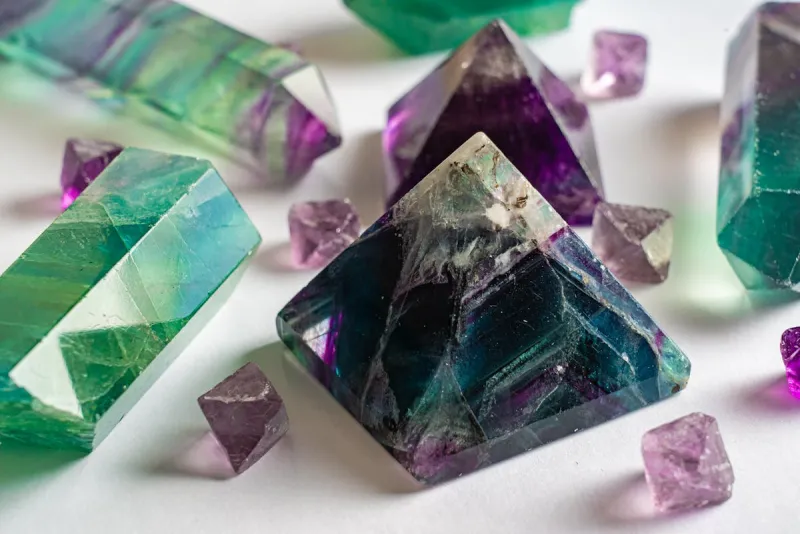
Topaz is one of the most versatile and widely available gemstones, prized for its excellent hardness, brilliant lustre, and broad range of colours. From the ubiquitous blue topaz found in high-street jewellers to the coveted imperial topaz of Brazil, this silicate mineral offers something for every taste and budget. As one of the November birthstones, topaz is a meaningful choice for gifts and personal jewellery.
Topaz Properties and Characteristics
Topaz is an aluminium fluorosilicate mineral that forms in igneous rocks, particularly granite pegmatites and rhyolite cavities. It rates 8 on the Mohs hardness scale, making it harder than quartz and most other semi-precious gemstones. However, topaz has perfect basal cleavage, meaning it can split along a flat plane if struck with enough force. This property requires some care in cutting and setting.
| Property | Details |
|---|---|
| Mineral | Topaz (Al2SiO4(F,OH)2) |
| Mohs Hardness | 8 |
| Refractive Index | 1.619 – 1.627 |
| Specific Gravity | 3.49 – 3.57 |
| Crystal System | Orthorhombic |
| Cleavage | Perfect basal cleavage |
| Lustre | Vitreous |
| Birthstone Month | November (also December for blue topaz) |
| Colour Range | Colourless, blue, yellow, orange, pink, red, brown |
Topaz Varieties by Colour
Imperial Topaz
Imperial topaz is the most valuable variety, displaying rich orange, reddish-orange, or pinkish-orange hues. The finest imperial topaz comes from the Ouro Preto region of Minas Gerais, Brazil. These stones are naturally coloured and untreated, making them highly prized by collectors. Saturated reddish-orange stones with no brown modifier command the highest prices.
Blue Topaz
Blue topaz is the most commercially popular variety, but virtually all blue topaz on the market has been produced by irradiating and then heating colourless topaz. Three standard shades have been established:
- Sky Blue – A light, soft blue resembling aquamarine. The palest of the three.
- Swiss Blue – A brighter, more vivid blue. The most popular shade.
- London Blue – A deep, slightly greyish blue. The most saturated and dramatic shade.
Pink Topaz
Natural pink topaz is rare and valuable. Most pink topaz on the market has been produced by heat-treating yellowish or brownish material. Fine natural pink topaz from Pakistan and Russia is highly collectible.
White (Colourless) Topaz
Colourless topaz is abundant and inexpensive. It is sometimes used as a diamond simulant, though it lacks diamond's fire and brilliance. White topaz scratches more easily than diamond and develops a hazy appearance over time with wear.
Topaz Sources
Brazil
Brazil is the most important source of topaz, particularly for imperial topaz. The Ouro Preto deposits in Minas Gerais have produced the world's finest orange and pink topaz for over two centuries. Brazil also supplies enormous quantities of colourless topaz used to produce treated blue topaz.
Pakistan and Afghanistan
The mountainous regions of northern Pakistan and Afghanistan produce beautiful natural pink and champagne-coloured topaz crystals, some of which are museum quality.
Other Sources
Sri Lanka, Nigeria, Myanmar, Mexico, Russia (the Ural Mountains), the United States (Utah, Texas), and Japan also produce noteworthy topaz.
Topaz Treatments
- Irradiation + heat – Used to produce blue topaz from colourless material. This treatment is permanent, stable, and universally accepted in the trade. Nearly all blue topaz has been treated this way.
- Heat treatment – Used to produce pink topaz from yellow or brownish stones. Generally permanent, though some heat-treated pink topaz can fade with prolonged sun exposure.
- Coating – A thin metallic coating applied to colourless topaz creates iridescent "mystic topaz." The coating can scratch and wear off over time, so these stones require careful handling.
Topaz Pricing
- Blue topaz (treated): $3 – $25 per carat depending on shade and size
- White topaz: $1 – $8 per carat
- Imperial topaz (yellow-orange): $50 – $500 per carat
- Fine imperial topaz (reddish-orange): $500 – $3,000+ per carat
- Natural pink topaz: $200 – $2,000+ per carat
Buying Tips for Topaz
- Know what you are buying – Blue topaz is treated and affordable; imperial topaz is natural and valuable. Make sure the variety is clearly specified.
- Inspect the cut – Topaz takes an excellent polish and should display strong brilliance. Well-cut topaz sparkles beautifully in any light.
- Check for cleavage damage – Examine the stone for signs of chipping along the basal cleavage plane, particularly at girdle edges.
- Choose protective settings – For rings, bezel settings or designs with protective prongs help guard against the risk of cleavage fracture from accidental impacts.
- Pair with complementary metals – Blue topaz pairs beautifully with white metals, while imperial topaz looks stunning in yellow gold. See our jewellery styles section for pairing ideas.
Topaz in Jewellery
Topaz is used extensively in all jewellery types, from fashion pieces to fine jewellery. Blue topaz is one of the best-selling coloured gemstones worldwide, favoured for its attractive colour, excellent hardness, and affordable price. Imperial topaz, by contrast, is a collector's stone that commands respect in the finest jewellery houses.
Due to its perfect cleavage, topaz is best suited for earrings, pendants, and brooches for everyday wear. Rings should be worn with awareness that a sharp blow can damage the stone.
Topaz Care
Clean topaz with warm soapy water and a soft brush. Avoid ultrasonic and steam cleaners, as the perfect cleavage can make the stone vulnerable to thermal shock. Coated topaz (such as mystic topaz) should never be cleaned with abrasive materials. Protect topaz from sharp blows and extreme temperature changes. See our jewellery care guide for comprehensive advice.
Frequently Asked Questions About Topaz
Is blue topaz natural?
Natural blue topaz does exist but is extremely rare and very pale. Nearly all blue topaz on the market has been produced by irradiating and heating colourless topaz. This treatment is permanent, stable, and fully accepted in the jewellery trade.
What is the difference between topaz and sapphire?
Sapphire is harder (9 vs 8), rarer, and more valuable than topaz. While both can appear blue, they are entirely different minerals with different optical properties. See our sapphire vs topaz comparison for a detailed analysis.
Can topaz be used in engagement rings?
Topaz's hardness of 8 makes it reasonably durable, but its perfect cleavage means it can chip if struck hard. For engagement rings, choose a protective setting and be mindful of the stone during physical activities. Sapphire or ruby would be more durable alternatives for daily wear.
What is mystic topaz?
Mystic topaz is colourless topaz that has been coated with a thin metallic film to produce a rainbow-like iridescent effect. The coating is surface-only and can scratch or wear off over time.