Gemstone Hardness Chart: Understanding the Mohs Scale
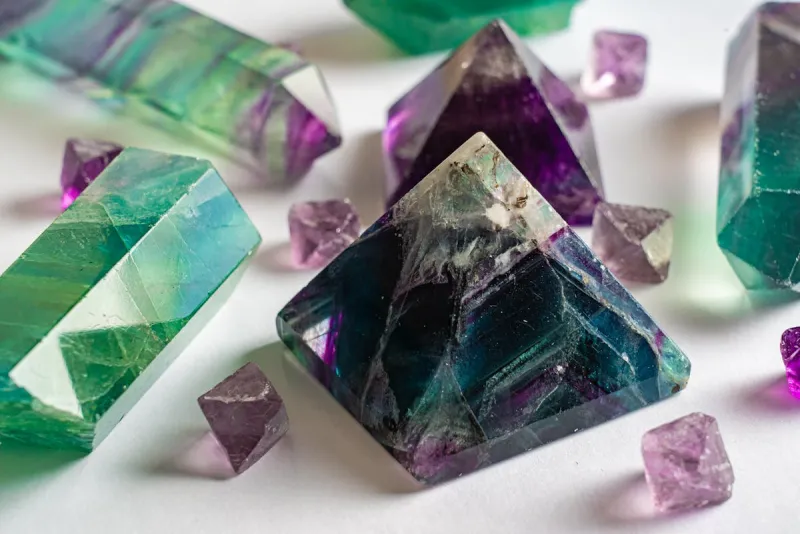
Hardness is one of the most important factors to consider when choosing a gemstone for jewellery. A stone's hardness determines how resistant it is to scratching and, by extension, how well it will hold up over years of wear. The standard tool for measuring gemstone hardness is the Mohs scale, developed by German mineralogist Friedrich Mohs in 1812. This guide explains the Mohs scale, charts the hardness of popular gemstones, and provides practical advice for selecting stones based on their intended use.
What Is the Mohs Scale?
The Mohs hardness scale ranks minerals from 1 (softest) to 10 (hardest) based on their ability to scratch one another. A mineral can scratch any mineral lower on the scale but will be scratched by any mineral higher on the scale. The scale is ordinal, not linear, meaning the difference in absolute hardness between adjacent numbers varies dramatically. For example, diamond (10) is roughly four times harder than corundum (9) in absolute terms, while corundum is only about twice as hard as topaz (8).
Complete Gemstone Hardness Chart
| Mohs Hardness | Gemstone(s) | Ring Suitability |
|---|---|---|
| 10 | Diamond | Excellent – ideal for daily wear |
| 9 | Ruby, Sapphire | Excellent – ideal for daily wear |
| 8 – 8.5 | Topaz, Spinel, Alexandrite | Very good – suitable with care (topaz has cleavage) |
| 7.5 – 8 | Emerald, Aquamarine, Morganite | Good – emerald needs protective setting due to inclusions |
| 7 – 7.5 | Garnet (most), Tourmaline | Acceptable – may show wear over years |
| 7 | Amethyst, Citrine, Quartz varieties | Acceptable – caution with daily wear |
| 6.5 – 7 | Tanzanite, Peridot, Demantoid Garnet | Moderate – better for earrings/pendants |
| 6 – 6.5 | Moonstone, Opal, Turquoise | Low – protective setting essential for rings |
| 5 – 6 | Lapis lazuli, Apatite | Poor – earrings and pendants only recommended |
| 2.5 – 4.5 | Pearl, Coral, Amber | Poor – very susceptible to scratching |
Why Hardness Matters for Jewellery
The practical importance of hardness depends on how the jewellery will be worn. The key benchmark is quartz, which has a hardness of 7. Quartz is a major component of household dust, which means that any gemstone softer than 7 can be gradually scratched by everyday dust and dirt. This is why gemmologists generally recommend gemstones with a hardness of 7 or higher for rings, which are exposed to more wear and abrasion than other jewellery types.
Rings
Rings take the most abuse of any jewellery type. They contact hard surfaces, are exposed to dust and dirt, and can be knocked against objects. For engagement rings and everyday bands, gemstones with a hardness of 8 or above are ideal. Sapphire (9), ruby (9), and diamond (10) are the top choices. Stones in the 7-8 range can work in ring settings with appropriate care and protective designs.
Earrings and Pendants
Earrings and pendants experience minimal physical contact, making them suitable for softer stones. Gemstones with a hardness of 5 or above can be safely worn in earrings and pendants, including opal, moonstone, and tanzanite.
Bracelets and Bangles
Bracelets experience moderate wear, similar to rings but usually less intense. Stones with a hardness of 7 or above are generally recommended for bracelets.
Hardness vs Toughness
It is important to understand that hardness (scratch resistance) is different from toughness (resistance to breaking or chipping). Some gemstones are hard but brittle, while others are softer but remarkably tough:
- Diamond – Extremely hard (10) but can chip along cleavage planes if struck at the wrong angle.
- Topaz – Hard (8) but has perfect basal cleavage that can cause it to split with a sharp blow.
- Emerald – Moderately hard (7.5-8) but brittle due to internal fractures and inclusions.
- Jade (nephrite) – Relatively soft (6-6.5) but incredibly tough due to its interlocking fibre structure, making it resistant to breaking.
- Ruby and sapphire – Both hard (9) and tough, with no cleavage. They are arguably the most practical coloured gemstones for everyday wear.
The 7 Rule: Quartz as a Benchmark
Because quartz (hardness 7) is present in household dust, it effectively sets the minimum standard for scratch-resistant jewellery. Any gemstone softer than 7 will gradually develop surface scratches from routine contact with dust. Stones at hardness 7 (such as amethyst and citrine) will resist most scratching but may show minor wear over many years. Stones above 7 will maintain their polish indefinitely under normal conditions.
Practical Recommendations
- Daily-wear engagement rings – Diamond (10), ruby (9), sapphire (9), or chrysoberyl (8.5) are the safest choices. See our buying guides for engagement ring advice.
- Occasional-wear rings – Emerald (7.5-8), aquamarine (7.5-8), topaz (8), or garnet (7-7.5) with protective settings.
- Earrings and pendants – Any gemstone is suitable, including softer options like opal (5.5-6.5), moonstone (6-6.5), and tanzanite (6-7).
- Heirloom pieces – Choose harder stones that will maintain their beauty for generations. Ruby and sapphire are outstanding choices.
Caring for Gemstones Based on Hardness
Hardness also affects how gemstones should be stored and cleaned. Always store gemstones separately to prevent harder stones from scratching softer ones. A stone should never be cleaned with materials harder than itself. For comprehensive care advice, see our jewellery care guide.
Frequently Asked Questions
What is the hardest gemstone?
Diamond is the hardest natural gemstone at 10 on the Mohs scale. No natural substance can scratch a diamond except another diamond.
Is a hardness of 7 good enough for a ring?
A hardness of 7 is the minimum generally recommended for rings. Stones at this hardness, such as amethyst and citrine, can be worn in rings but may develop minor surface scratches over years of daily wear. For engagement rings, hardness 8+ is preferred.
Why can a hard stone still break?
Hardness measures scratch resistance, not impact resistance. Some hard stones like diamond and topaz have cleavage planes where they can split when struck. Toughness, a separate property, measures resistance to breaking.
Can softer gemstones be worn daily?
Softer gemstones can be worn daily in earrings and pendants without issue. For rings and bracelets, they will eventually show wear. Protective settings and mindful habits help, but harder stones are always a safer choice for daily ring wear.