Natural vs Synthetic Gemstones: Everything You Need to Know
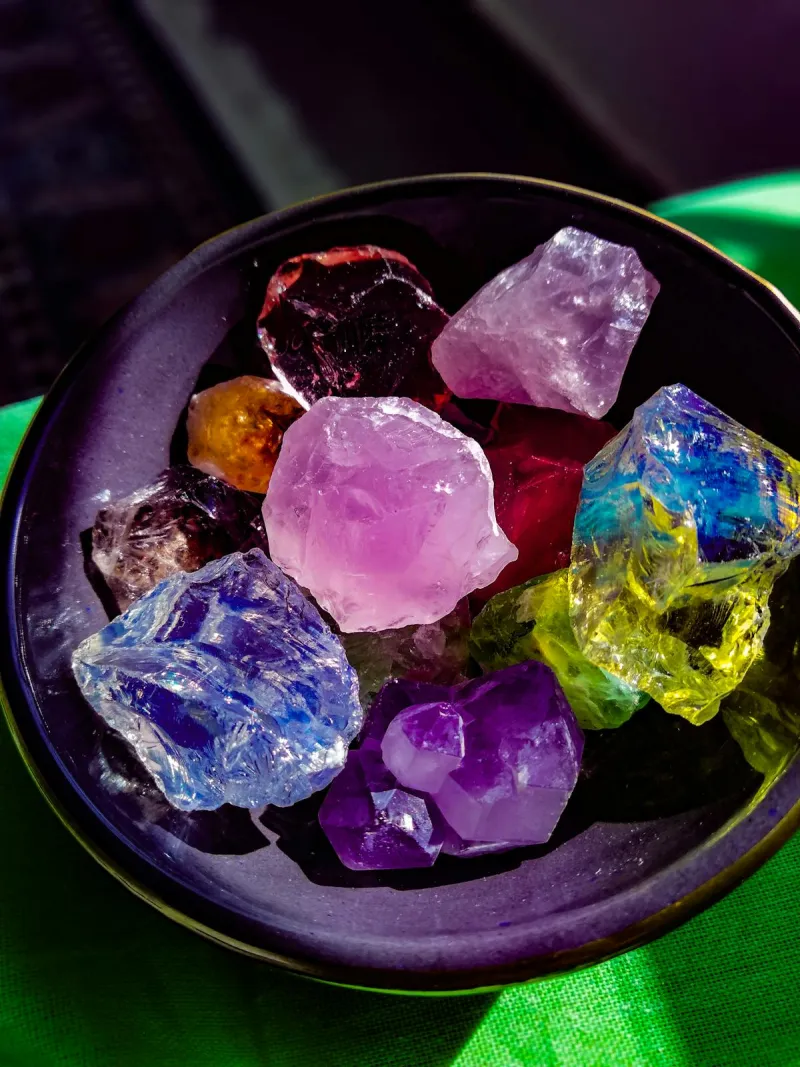
The distinction between natural and synthetic gemstones is one of the most important topics in modern gemmology. Synthetic (lab-created) gemstones have the same chemical composition, crystal structure, and physical properties as their natural counterparts, yet they cost a fraction of the price. Understanding the differences between natural, synthetic, and simulated gemstones is essential for making informed purchasing decisions. This guide covers how synthetics are made, how they compare to natural stones, and how to tell them apart.
Key Definitions
Before diving deeper, it is important to understand three distinct categories:
- Natural gemstones – Formed in the earth over millions of years through geological processes. These are the gems that have been traded and treasured throughout human history.
- Synthetic (lab-created) gemstones – Created in a laboratory that replicates the conditions under which natural stones form. They have the same chemical composition, crystal structure, and properties as natural gems. Terms like "lab-grown," "lab-created," and "synthetic" all refer to these stones.
- Simulants (imitations) – Materials that resemble a gemstone in appearance but have a different chemical composition. For example, cubic zirconia is a diamond simulant; it looks like diamond but is not diamond. Glass, plastic, and other materials can also serve as simulants.
Comparison Overview
| Factor | Natural | Synthetic | Simulant |
|---|---|---|---|
| Chemical Composition | Natural mineral | Identical to natural | Different material |
| Crystal Structure | Natural growth | Identical to natural | Different |
| Physical Properties | As formed in nature | Identical to natural | Different |
| Formation Time | Millions of years | Days to months | Varies |
| Inclusions | Natural features | Different growth patterns | Varies |
| Value | Highest | 5-20% of natural | Very low |
| Resale Value | Retains value | Minimal resale | None |
How Synthetic Gemstones Are Made
Flame Fusion (Verneuil Process)
The oldest and most common method, invented in 1902. Powdered ingredients are dropped through a high-temperature flame, melting and crystallising on a rotating pedestal. Used to produce synthetic ruby, sapphire, and spinel. Flame fusion stones are inexpensive to produce and widely available.
Flux Growth
Nutrients are dissolved in a molten flux (solvent) at high temperatures, and crystals slowly grow over weeks to months. Flux-grown synthetics closely resemble natural stones and can be more difficult to identify. Used for synthetic emerald, ruby, sapphire, and alexandrite.
Hydrothermal Growth
Mimics the conditions under which natural quartz and emerald form, using water and heat under high pressure. Used for synthetic amethyst, citrine, emerald, and aquamarine. Hydrothermal synthetic amethyst can be particularly difficult to distinguish from natural material.
Czochralski (Crystal Pulling)
A seed crystal is dipped into molten material and slowly pulled upward, growing a large single crystal. Primarily used for synthetic alexandrite and some garnets.
Chemical Vapour Deposition (CVD) and HPHT
These methods are primarily used for lab-grown diamonds. HPHT (High Pressure, High Temperature) replicates the conditions under which natural diamonds form. CVD grows diamonds from a carbon-containing gas. Both produce diamonds with identical properties to natural stones.
Common Synthetic Gemstones
- Synthetic ruby – Widely available via flame fusion (inexpensive) and flux growth (higher quality). Used extensively in watches and industrial applications as well as jewellery.
- Synthetic sapphire – Available in all colours. Flame fusion sapphire is commonly used in watches and electronics. Higher-quality flux and Czochralski sapphires are used in fine jewellery.
- Synthetic emerald – Produced by flux and hydrothermal methods. Lab-grown emeralds often have better clarity than natural stones, which can actually be a telltale sign.
- Lab-grown diamond – Produced by CVD and HPHT methods. Rapidly growing in market share, particularly for engagement rings.
- Synthetic amethyst and citrine – Hydrothermal synthetic quartz is abundant and very difficult to distinguish from natural material without advanced testing.
- Synthetic opal – Lab-created opal can display play of colour similar to natural opal. Often identifiable by its unusually regular pattern of colour patches.
How to Tell Natural from Synthetic
Distinguishing natural from synthetic gemstones can range from straightforward to extremely challenging, depending on the stone and the production method:
- Inclusions – Natural stones contain inclusions formed by geological processes (mineral crystals, fractures, growth tubes). Synthetics may contain gas bubbles (flame fusion), flux remnants (flux growth), or characteristic growth patterns that differ from natural stones.
- Growth patterns – Under magnification, flame fusion stones show curved growth lines (striae), while natural corundum shows angular growth zoning. This is one of the most reliable identification methods.
- UV fluorescence – Some synthetics fluoresce differently than their natural counterparts under ultraviolet light.
- "Too perfect" – A stone that appears flawless and intensely coloured at an unusually low price should raise suspicion. In nature, such quality is extremely rare and expensive.
- Laboratory testing – For valuable stones, professional laboratory analysis using spectroscopy, photoluminescence, and microscopy provides definitive identification. Always obtain a lab report for significant purchases.
Value Comparison
The value gap between natural and synthetic gemstones is substantial. A fine natural ruby might cost $10,000 per carat, while a synthetic ruby of similar appearance might cost $50-500 per carat. This price difference reflects the rarity and geological history of natural stones, not a difference in chemical or physical properties.
Importantly, synthetic gemstones have minimal resale value. While natural gemstones, particularly fine rubies, sapphires, and emeralds, can hold and increase in value over time, synthetic stones depreciate rapidly. This is a critical consideration for buyers who view gemstones as both adornment and investment.
Ethical and Environmental Considerations
Some buyers prefer synthetic gemstones for ethical or environmental reasons. Lab-created stones avoid the environmental impact of mining and the ethical concerns associated with some mining operations. However, the natural gemstone industry also provides livelihoods for millions of people in developing countries. The choice between natural and synthetic often involves weighing these competing considerations.
Buying Advice
- Always ask – Reputable sellers will clearly disclose whether a stone is natural, synthetic, or simulated. If the disclosure is unclear, ask directly.
- Get a lab report – For any significant purchase, obtain a report from a respected laboratory such as GIA, Gubelin, or SSEF.
- Be price-aware – If a deal seems too good to be true, it probably is. A large, clean, vivid ruby at a bargain price is almost certainly synthetic or treated.
- Buy from reputable sources – Established jewellers and dealers with strong reputations are far less likely to misrepresent their stones.
- Know your priorities – If you prioritise appearance and affordability, synthetics often offer strong value. If you value rarity, geological history, and stronger collector interest, natural stones are usually the better fit.
Frequently Asked Questions
Are synthetic gemstones "real"?
Synthetic gemstones are chemically and structurally identical to natural gems. They are "real" in a scientific sense. However, they lack the geological rarity and natural origin that give natural gems their cultural and financial value.
Can a jeweller tell natural from synthetic?
An experienced gemmologist can identify most synthetics using magnification and basic gemmological tools. Some synthetics, particularly hydrothermal quartz, may require advanced laboratory testing for definitive identification.
Are lab-grown diamonds the same as synthetic diamonds?
Yes. "Lab-grown," "lab-created," and "synthetic" all refer to the same thing: diamonds produced in a laboratory rather than mined from the earth. The FTC requires that these distinctions be clearly disclosed to consumers.
Do synthetic gemstones last as long as natural ones?
Yes. Since synthetic gemstones have the same physical properties as natural stones, they are equally durable. A synthetic sapphire is just as hard (9 on the Mohs scale) as a natural sapphire.