Ring Size Guide & Calculator
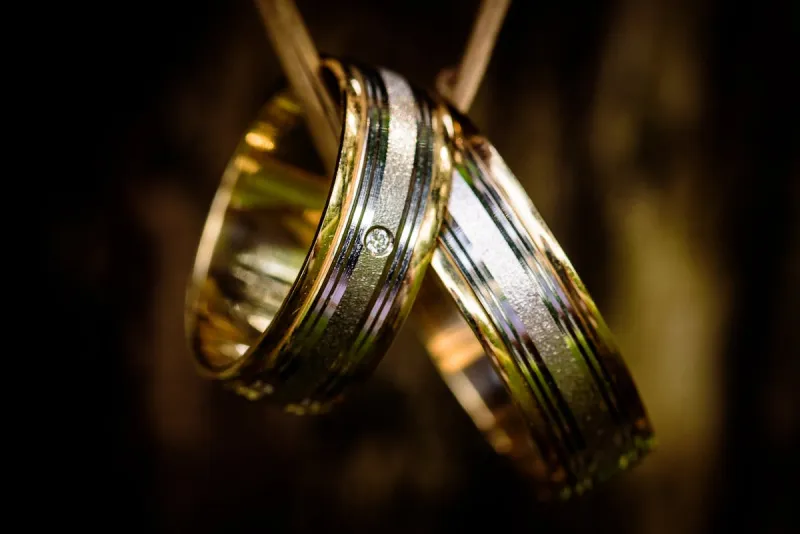
Getting the right ring size is essential, whether you are buying an engagement ring, a wedding band, or a gift for someone special. A ring that is too tight will be uncomfortable, while one that is too loose risks slipping off and getting lost. This guide provides everything you need to determine the correct ring size at home, along with an interactive calculator and a comprehensive international conversion chart.
Ring sizes vary between countries. The United States uses a numerical scale, the United Kingdom and Australia use an alphabetical system, and most of Europe measures in millimetres corresponding to the inner circumference. Our chart and calculator below let you convert seamlessly between all three systems.
Ring Size Calculator
Measure the inner diameter of an existing ring in millimetres, then enter it below. The calculator will find your closest US, UK, and EU ring size.
Your Ring Size
International Ring Size Conversion Chart
The table below shows the most common ring sizes across US, UK, and EU systems, along with the corresponding inner diameter in millimetres.
| US Size | UK Size | EU Size | Inner Diameter (mm) |
|---|---|---|---|
| 3 | F | 44 | 14.0 |
| 3.5 | G½ | 45.5 | 14.4 |
| 4 | H½ | 47 | 14.8 |
| 4.5 | I½ | 48 | 15.2 |
| 5 | J½ | 49.5 | 15.6 |
| 5.5 | K½ | 50.5 | 16.0 |
| 6 | L½ | 51.5 | 16.5 |
| 6.5 | M½ | 53 | 16.9 |
| 7 | N½ | 54 | 17.3 |
| 7.5 | O½ | 55.5 | 17.7 |
| 8 | P½ | 57 | 18.1 |
| 8.5 | Q½ | 58 | 18.5 |
| 9 | R½ | 59 | 19.0 |
| 9.5 | S½ | 60.5 | 19.4 |
| 10 | T½ | 61.5 | 19.8 |
| 10.5 | U½ | 63 | 20.2 |
| 11 | V½ | 64 | 20.6 |
| 11.5 | W½ | 65.5 | 21.0 |
| 12 | X½ | 66.5 | 21.4 |
| 12.5 | Z | 68 | 21.8 |
| 13 | Z+1 | 69 | 22.2 |
How to Measure Your Ring Size at Home
Method 1: The String or Paper Strip Method
- Cut a thin strip of paper or a piece of non-stretchy string approximately 10 cm long.
- Wrap it snugly around the base of the finger you intend to wear the ring on. Make sure it passes over your knuckle comfortably.
- Mark the point where the strip overlaps with a pen.
- Lay the strip flat and measure the distance between the end and the mark in millimetres. This is your circumference.
- Divide by π (3.14159) to get the inner diameter, then use the calculator above to find your size.
Method 2: Using an Existing Ring
- Choose a ring that fits the intended finger well.
- Place the ring on a ruler and measure the inside distance from edge to edge in millimetres. This is the inner diameter.
- Enter the measurement into the calculator above for an instant size conversion.
Important Sizing Tips
- Fingers change size throughout the day. They tend to be smallest in the morning and largest in the evening. For the most accurate measurement, measure at the end of the day.
- Temperature matters. Fingers swell in hot weather and shrink in the cold. Try to measure at a comfortable room temperature.
- Wide bands need a larger size. If you are buying a ring wider than 6 mm, go up by half a size to ensure a comfortable fit.
- Dominant hands are slightly larger. If you wear your ring on your dominant hand, it may need to be a quarter to half size bigger than the same finger on your other hand.
- Measure multiple times. Take at least three measurements on different occasions and use the average for the best accuracy.
When to Get Professionally Sized
While at-home methods work well for most people, there are situations where visiting a professional jeweller is strongly recommended:
- High-value purchases. For engagement rings and other significant investments, the small cost of professional sizing is well worth the peace of mind.
- Unusual finger shapes. If you have large knuckles relative to the base of your finger, a jeweller can recommend comfort-fit bands or slightly adjusted sizes.
- First-time ring wearers. If you have never worn a ring before, you may not know what a correct fit feels like. A jeweller can guide you.
- Resizing existing rings. If a ring no longer fits, a professional can resize it without damaging the setting or stones.
Most jewellers offer free ring sizing with a set of graduated metal rings. The process takes just a few minutes and gives you a definitive answer.